
LUNAR NEW YEAR FLAVOURS

When the lunar calendar turns and the first new moon rises, millions of people around the world mark Chinese New Year with joy, rituals and, centrally, food. In 2026, this festival begins on 17 February, ushering in the Year of the Fire Horse and signalling the sweeping away of the old and the welcoming of good fortune for the year ahead. Known as Spring Festival in China and observed by Chinese communities everywhere, the 15-day celebration is steeped in centuries-old customs that revolve around family and food, believed to attract prosperity, longevity and happiness. Family members travel great distances to return home for the reunion dinner on New Year’s Eve, an occasion that unites generations around tables filled with dishes loaded with symbolism and meaning.
This mass movement of people is unprecedented in scale. Officials expect around 9.5 billion passenger trips during the 40-day Spring Festival travel period, including some 540 million rail journeys and 95 million air trips, underscoring how deeply food and family are intertwined during the holiday. China is bracing for record travel volumes this Lunar New Year.
Symbolism on the plate: Traditions rooted in meaning
Apart from the traditional decorations, lion dances and exchange of red envelopes, it is the banquet itself that tells the story of cultural heritage and aspirations for the year ahead.
In mainland China, festive menus brim with foods defined by auspicious symbolism. Whole fish is practically mandatory at the reunion dinner, since the Chinese word for fish, yú, sounds like the word for “surplus,” conveying wishes for abundance and prosperity. Noodles, especially long, uncut varieties called longevity noodles, are served to represent long life, while dumplings shaped like ancient silver ingots are eaten in the belief they will bring wealth. Sweet sticky rice balls known as tangyuan celebrate familial togetherness, and nian gao, a glutinous rice cake whose name sounds like “higher year,” symbolises growth, success and advancement. Together, these dishes form a feast that goes beyond flavour, inviting good fortune into the home and symbolising hopes for a prosperous and healthy year.
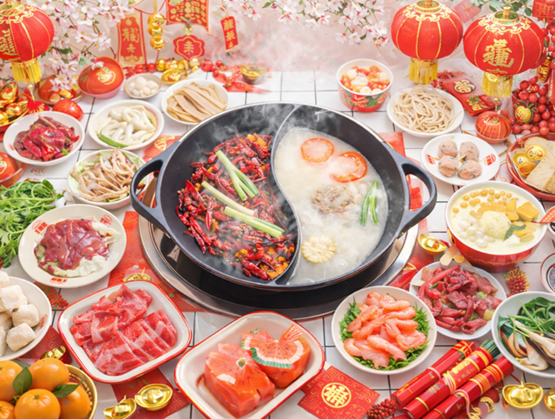
Hotpot also plays a central role in many Chinese New Year celebrations, particularly in southern regions and urban households. Gathered around a shared simmering broth, family members cook thinly sliced meats, seafood, tofu and vegetables together at the table. Beyond its warmth and versatility, hotpot embodies togetherness and equality, with everyone sharing from the same pot. Its circular shape and continuous bubbling are often interpreted as symbols of unity and continuity, making it a popular choice for reunion dinners that stretch late into the evening.
Some regions and communities add their own twists. In northern China, dumplings filled with various ingredients dominate, whereas southern regions might favour dishes like steamed whole chicken, wonton soups and special sweets. Even alcoholic beverages play a role: rice wine and other traditional spirits are often served to toast to health and unity during festive meals. In rural areas and among older generations, food preparation itself is a ritual that can begin days in advance, with recipes passed down through families and imbued with memory and tradition.
The scale of consumption during this period is measurable. In 2025, retail and catering sales across China grew by about 4.1 percent year-on-year during the Spring Festival holiday, with the catering sector alone rising by approximately 6.2 percent, reflecting stronger demand for meals and dining services. Premade dishes exceeded 20 billion yuan in sales during the 2025 Spring Festival, up more than 50 percent year-on-year, highlighting how convenience formats are increasingly complementing traditional home cooking.
A mosaic of flavours: International variations
Beyond China’s borders, Chinese New Year’s culinary customs have evolved beautifully into distinct regional identities. In Malaysia and Singapore, for example, yusheng—also called lo hei or prosperity toss—is an exuberant shared dish of raw fish mixed with shredded vegetables and sauces. Diners stand around the table, lifting ingredients high and calling out auspicious phrases as they toss them together, an act believed to bring good luck and abundance. Although this dish has roots in Chinese cuisine, it has grown into a signature highlight of festive celebrations in Southeast Asia, symbolising community and collective hope.
Vietnam’s Tết mirrors many Chinese New Year traditions but with uniquely Vietnamese touches. Dishes such as bánh chưng and bánh tét—square and cylindrical glutinous rice parcels filled with mung beans and pork—are central to the holiday feast. Eaten with pickled vegetables and served over several days of celebration, these foods honour ancestors and familial bonds while spotlighting Vietnam’s own agricultural heritage.
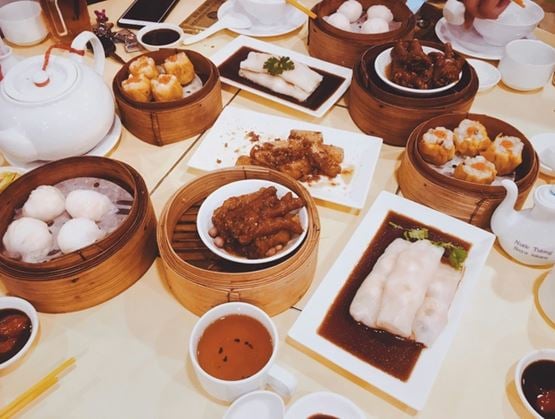
Across diasporic communities in North America, households often blend tradition with innovation. Dim sum favourites like sesame balls (jian dui) share space on festive tables with locally popular adaptations, from banh tet-inspired wraps to fusion desserts that reflect the multicultural context of Lunar New Year celebrations abroad. In the U.S. and Canada, popular Chinatowns host feasts and food stalls where visitors savour both traditional foods and contemporary adaptations.
Beyond the feast: Connecting cultures and the global food landscape
The foods of Chinese New Year do more than nourish; they serve as cultural bridges that link heritage with contemporary tastes. According to a broad estimate, roughly 20 percent of the world’s population celebrates the Lunar New Year in various forms, a testament to its expansive cultural influence.
Beyond cultural significance, Chinese New Year also represents a major moment of global consumption. In 2026, the Lunar New Year period is expected to generate around USD 100 billion in global commercial opportunities, driven by heightened spending on traditional foods, gifts, decorations and celebratory products across eight key markets, according to industry estimates.
Data further underscore the importance of the festival for the fast-moving consumer goods sector. Consultancy Worldpanel estimates that around 20 percent of annual FMCG sales took place during the Chinese New Year period in 2024, with 2025 reaching a six-year high, up 5.9 percent year-on-year. Categories including food, beverages, dairy and household products all recorded increased spending. Out-of-home consumption also gained momentum, with a reported 10 percent rise in foot traffic to restaurants and dining establishments during the 2025 holiday period. Online transactions between 9 and 17 February 2024 averaged 2.63 billion per day across major payment platforms, up 18.6 percent compared with the previous year, much of it linked to food purchases and household goods.
With consumption levels peaking during this period, the festival represents a strategic opportunity for retailers and producers to capture market share and respond to growing demand for premium goods and fresh produce. JD’s 7Fresh supermarket chain has expanded its retail footprint with new flagship stores in Beijing and Shanghai, with the Beijing location attracting more than 35,000 customers on its opening day. The 4,000-square-metre store has promoted high-quality offerings such as “24-Hour Vegetables” and “24-Hour Eggs”, guaranteeing rapid farm-to-shelf delivery. Meanwhile, Wumart Group has introduced promotional initiatives including its “Crazy 4:30” flash sale to meet demand for convenient dinner ingredients and holiday stockpiling, emphasising steady supply and customer-focused service during the peak season.
This momentum reflects a broader shift visible in Europe, where demand for Asian food products continues to grow well beyond seasonal celebrations. Rising interest in authentic Asian cuisines, coupled with busy lifestyles, has fuelled strong uptake of ready-to-eat meals, instant noodles and frozen specialities. At the same time, health and wellness trends are shaping consumption, with plant-based options, soy-based products and dishes perceived as lighter or more balanced gaining ground. Cultural integration and immigration have further accelerated this evolution, bringing traditional festive foods from community tables into mainstream retail and foodservice channels.
For professionals in the global F&B world, these festive foods offer insights into consumer preferences across markets. At SIAL Network, international food industry trade shows bring together voices from across food cultures and industries to explore trends, innovations and the cutting edge of culinary creativity. This global food industry trade show illustrates how traditional celebrations like Chinese New Year both influence and reflect broader shifts in global food culture. As the world warms to flavours old and new, cultural festivals and international gatherings alike create shared spaces in which the symbolic and the contemporary dine together, laying the foundation for fresh ideas and greater understanding across the global table.
Image credits:
Humphrey M - Unsplash
Kelvin Zyteng - Unsplash
Van Thanh - Unsplash