
WHEN VALENTINE’S DAY BECOMES AN AT-HOME EXPERIENCE

Valentine’s Day still carries the glow of tradition, but the way couples eat on 14 February is quietly changing. The classic restaurant reservation remains popular, yet the celebration is increasingly shaped by choice, convenience and a desire to personalise the moment. Across many markets, a more flexible approach is taking hold: eating in rather than out, mixing indulgence with dietary preferences, and choosing experiences that feel shared rather than staged.
That shift is not only about budgets or busy diaries. It reflects a broader evolution in the food world, where romance is no longer limited to a single, formal ritual. For some, the most memorable date is not a table-for-two at 8pm, but a slow evening at home with music playing, a dish assembled together, and the freedom to eat on their own schedule.
From reservations to sofa cushions: why “staying in” feels smarter
Valentine’s is increasingly supported by an expanding ecosystem of premium “dine-in” options. Supermarkets and retailers now treat the occasion almost like a seasonal food moment, with curated menus designed to mimic restaurant structure while keeping the setting private. Many of these offers also extend into delivery channels, blurring the line between retail and hospitality and making it easier for couples to choose home without feeling they have downgraded the experience.
Alongside this, restaurant-quality meal kits have become a mainstream Valentine’s choice, promoted as a way to cook together without the stress of designing a menu from scratch. According to Global Market Insights, the global meal kit market was valued at approximately USD 18.1 billion (around €16.7 billion) in 2024 and is expected to grow at a compound annual growth rate of more than 12 percent through 2034. By the end of that period, the market could reach USD 58.3 billion (around €53.7 billion), driven by rising demand for convenient, ready-to-cook solutions that combine flexibility, personalisation and the experience of cooking at home.
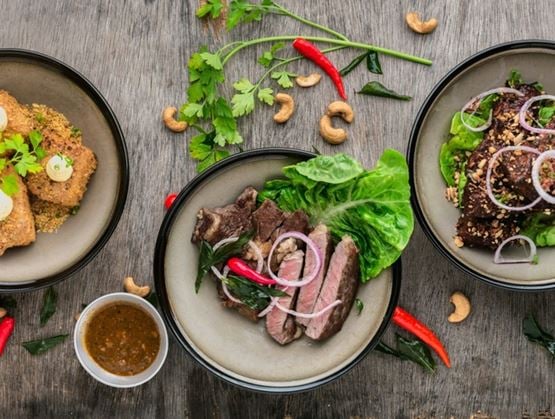
Round-ups of Valentine’s meal kits show how the format now ranges from heat-and-serve convenience to more hands-on cooking projects, often built around multi-course pacing and finishing touches.
This move home also aligns with an appetite for food flexibility. Couples are more likely to accommodate mixed preferences at the same table, whether that means reducing meat, choosing alcohol-free pairings, or keeping portions lighter. In the UK, consumer research referenced by AHDB using Kantar data has pointed to a gradual rise in meat-free main meal occasions eaten at home, signalling how everyday habits are already shifting in a direction that naturally carries into seasonal moments like Valentine’s.
The emotional logic is simple: at home, couples can time the evening around their own rhythm, cook something that fits their dietary choices, and share the process rather than outsourcing the entire event. Instead of one high-pressure sitting, the celebration becomes an unfolding experience.
Love in a box: the rise of emotional packaging and seasonal cues
If couples are spending more of the evening at home, packaging plays a larger role in setting the mood. On Valentine’s Day, food and drink often functions as a gift, and packaging becomes the first touchpoint of emotion. Limited-edition sleeves, heart cues, colour palettes, handwritten-style notes and “for two” formats all help a product signal romance before it is even opened.

Trend analysts have highlighted how seasonal and collaborative limited-edition packaging is used to create novelty and emotional connection, particularly for treat categories that are shared, photographed, or given as gifts.
Yet emotional packaging is not just decoration. Research into limited-edition packaging in food and beverage contexts suggests that emotional value is a key mechanism in how consumers respond to these formats, and that results can depend on the consumer’s mindset, such as their need for uniqueness. In other words, packaging can meaningfully shape how “special” a product feels, but it has to align with the buyer’s motivations rather than rely on generic symbolism alone.
This is where Valentine’s food packaging is evolving. Instead of only shouting “romance”, many brands now design packs that communicate shared activity. Think measured ingredients, step-by-step cards, pairing suggestions, QR codes for playlists, or plated presentation prompts. The pack becomes part of the experience, not simply a wrapper.
Europe, Asia, America: different routes to the same idea
Across Europe, the direction of travel has been towards premiumisation at home and hybrid retail-hospitality models. Meal kits, dine-in deals, and curated sharing formats allow couples to build a restaurant-like structure while keeping the comfort and control of home. The growth of meal kit culture supports this wider pattern: globally, the meal kit delivery services market has been sized in the tens of billions of dollars with strong projected growth, reflecting sustained demand for “experience-led convenience”.
In Asia, the Valentine’s lens often looks different, but the logic is similar: make it shareable, make it personal, make it easy to execute. Japan’s Valentine’s culture has long been shaped by gifting norms, particularly around chocolates, yet market data suggests the infrastructure for at-home experiences is strengthening. Japan’s meal kit delivery services market has been estimated at over a billion dollars in 2024 with growth projected through the decade, indicating momentum behind cook-at-home and heat-and-eat formats that fit busy urban lifestyles.
In parts of Asia, Valentine’s Day is also shaped by what follows it. In Japan, South Korea and several neighbouring markets, White Day on 14 March extends the celebration cycle, traditionally positioning it as a moment of reciprocation. While originally centred on gifting sweets, White Day has evolved alongside changing food habits. Couples increasingly mark the occasion with shared dining experiences, premium desserts designed for two, or at-home meal kits that feel more personal than a single boxed gift. This two-step calendar reinforces the idea of Valentine’s as an experience rather than a one-off purchase, encouraging brands and retailers to think in terms of sequences, storytelling and repeat moments around food.
South Korea provides another angle: a digitally mature food ecosystem where at-home dining is supported by delivery platforms and e-commerce behaviour. A USDA report on Korea’s food e-commerce market notes that food delivery services represent a meaningful share of e-commerce value and that food-related online sales have been among the largest online categories, reinforcing how “date night at home” can be powered by delivery just as easily as by cooking.
In China, food delivery has become a central part of everyday eating habits, particularly in large urban centres where convenience, speed and digital integration shape consumer choices. The market is the largest globally, with an estimated value of around €210 billion in 2024, supported by more than 550 million active users. Platforms such as Meituan and Ele.me enable couples and households to access restaurant-quality meals, ready-to-eat dishes and curated menus at any time of day. This infrastructure makes at-home celebrations, including Valentine’s Day, highly flexible, allowing food experiences to be ordered, shared and adapted to individual preferences rather than fixed dining occasions.
In the United States, delivery platforms increasingly frame Valentine’s as a premium ordering moment, not only a restaurant night. DoorDash has described Valentine’s Day as a top day for premium restaurant items ordered for delivery, with spikes for products such as lobster and oysters in its trend reporting. This points to an American version of the same evolution: the desire for restaurant-level indulgence, enjoyed at home, on a flexible schedule.
Across these regions, the cultural details differ, but the pattern converges. Couples want celebrations that feel tailored rather than templated. They want to share an experience, whether that is cooking together, assembling a kit, ordering in something special, or building a menu that matches their preferences. And increasingly, they want the freedom to celebrate without the fixed choreography of a crowded dining room.
That shift matters beyond one calendar date. It signals how the food sector is adapting to consumers who value meaning, flexibility and participation. It also helps explain why formats such as ready-to-cook dinners, curated kits and emotion-led packaging are becoming more central to seasonal strategy.
At the end of the chain, Valentine’s becomes a small but revealing case study of where food is heading: towards experience, story and connection. These are exactly the themes that surface across the food industry trade show calendar, and why SIAL Network events remain a key place to track how products, packaging and new formats respond to changing consumer rituals, in February and far beyond.
Image credits:
Lily Banse - Unsplash
Liudmila Chernetska - iStock
Victoria Kopivska - iStock
Iggi_Boo - iStock