
Global Christmas Traditions and Their Festive Foods

Christmas has long been seen as a celebration of togetherness, yet the ways in which families prepare for the occasion vary dramatically across continents. While many Europeans sit down to turkey or roast meats on the 24th and 25th of December, this familiar table is only one version of a festival that has been shaped by ancient rites, Christian calendars and regional ingredients. The result is a patchwork of customs that have travelled through time, each carrying its own symbolism and seasonal foods.
Nordic legends and European rites
In the far north, Christmas still echoes the spirit of midwinter rituals. In Greenland, narwhal blubber is served with sea salt and rye bread, a delicacy traditionally offered by men who take charge of the evening meal. Iceland maintains the folklore of thirteen mountain-dwelling figures who descend one by one in the days leading up to Christmas Eve, while households prepare smoked lamb for the 25th. Sweden favours cured fish and the famous rice pudding hiding a single almond whose sweetness or bitterness once foretold the prospects of marriage.
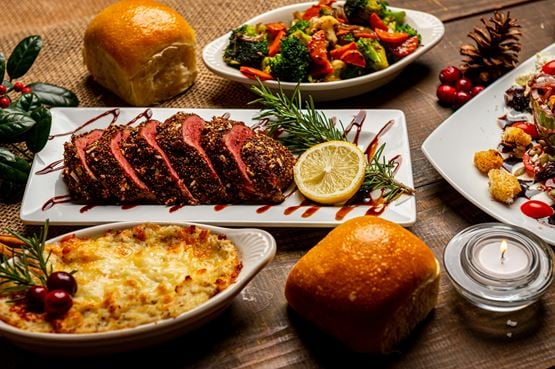
Further east, food reflects long fasts and strong Orthodox heritage. Russians observe a period of abstinence until the first star appears on 7 January, then break it with a sweet porridge of grains, honey and poppy seeds. The meal that follows includes koulibiac, beef Stroganov and the layered Napoleon cake. Polish households maintain the tradition of sharing unleavened wafers before sitting down to a meatless meal that revolves around barszcz beetroot soup, pierogi and mushrooms. Czech families continue the custom of keeping a live carp in the bathtub before serving it fried or with a dark, spiced sauce.
Festivities across Africa, Asia and Oceania Across
Africa, traditions reflect a blend of Christian rites and local flavours. Egyptian and Ethiopian Christians celebrate in early January after a long fast without meat or dairy, breaking it with dishes like fata, spicy stews or chicken-filled crêpes. In Nigeria, fireworks on 24 December mark the start of celebrations and families gather the following day for spicy rice dishes, grilled chicken or moin-moin, a savoury steamed preparation of beans, vegetables and sometimes fish or eggs.
In Asia, where climates and cultures differ widely, the festive season takes on new forms. Singapore transforms its shopping districts with lights and artificial snow, creating a theatrical atmosphere around late-night dining and international dishes. Indian communities decorate churches and tropical trees with bright flowers before attending midnight services, followed by meals of pork and spiced rice. Vietnamese families may embrace Western-style turkey dinners or opt for simple poultry soups depending on tradition and circumstance, while the Philippines hosts one of the world’s longest Christmas seasons, culminating in feasts of paella, glazed ham, tomato-braised tongue, cheeses and tropical fruits.

American abundance and Latin flair
North America blends colonial heritage with indigenous foods and immigrant influences. In Alaska, smoked salmon, doughnuts and simple biscuits appear alongside festive dishes. Across the United States, turkey remains strongly linked to November’s Thanksgiving, so many families turn to beef or seasonal bakes in December. Eggnog, the milk-based drink spiced with nutmeg and often enriched with rum, is a defining part of the holidays. Historical food writers trace its origins to medieval posset drinks, while the Smithsonian Institution notes that its popularity spread in the eighteenth century thanks to readily available dairy in the colonies.
Latin America brings intense regional variety to the season. Peru infuses its Christmas turkey with pisco and serves it with sauces influenced by Chinese, Japanese or indigenous cuisines, reflecting centuries of migration. Mexico, cradle of the original domesticated turkey, prepares dishes ranging from maize soups to bacalao and richly spiced mole. Across the Caribbean, festive meals honour both colonial heritage and African influence, featuring pineapple-glazed ham, black pudding, christophine gratin and rum-based Ti’punch.
Tradition, change and the global food landscape
What unites these diverse customs is the idea of sharing. Whether families gather around narwhal blubber, panettone, spicy stews or barbecued seafood, the festive table creates a moment suspended between ritual and celebration. Food historians often point to Christmas as one of the clearest examples of how a global festival adopts local ingredients and techniques over centuries.
This blend of heritage and innovation also mirrors how the modern international food industry exhibition landscape evolves. At global events such as the SIAL Network’s shows, traditions come into dialogue with contemporary products, from regional cheeses and festive pastries to innovative drinks that reinterpret winter flavours. As buyers, chefs and producers meet across continents, the stories behind these dishes continue to shape how the world celebrates Christmas, one table at a time.