
VIETNAM IS ASIA’S RISING CULINARY POWERHOUSE

A bowl of phở may still arrive on a plastic table at dawn, fragrant with herbs and steaming broth. By evening, the same flavour references can appear in a tasting menu, transformed through fermentation, precision cooking or contemporary plating. That ability to move between everyday food and premium dining is becoming one of Vietnam’s most valuable culinary assets.
Marriott International’s The Future of Food 2026 identifies Vietnam among Asia Pacific’s emerging culinary hotspots as diners increasingly favour experiences rooted in local food culture.
Vietnam was also named Asia’s Best Culinary Destination at the 2025 World Culinary Awards, ahead of nominees including Thailand, Singapore, Malaysia, South Korea and China. Hanoi was separately recognised as Asia’s Best Emerging Culinary City Destination. The accolades reflect something broader than the popularity of a handful of emblematic dishes. Vietnamese food is increasingly functioning as a tourism asset, a source of cultural influence and an entry point into one of Southeast Asia’s most dynamic consumer markets.
When eating becomes a reason to travel
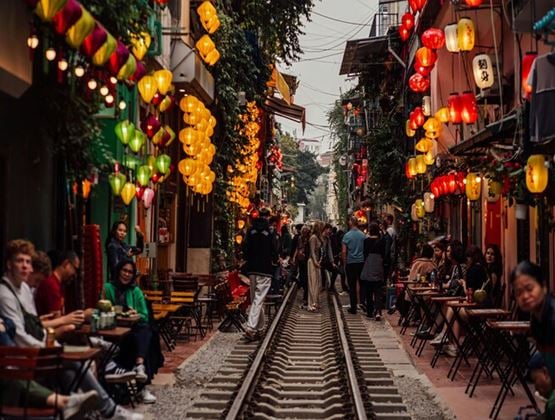
Vietnam’s culinary strength lies partly in its range. A visitor can move from a bowl of noodles costing only a few dollars to contemporary Vietnamese fine dining without leaving the same city. Regional distinctions add another layer, from the restrained flavours of northern cooking to central Vietnam’s imperial traditions and the sweeter, herb-rich dishes associated with the south.
That diversity is increasingly being developed as a tourism product in its own right. Ho Chi Minh City’s tourism authorities have been working on 20 new culinary tour programmes since September 2025, connecting food with shopping, sightseeing, local history and agricultural experiences. The initiative forms part of the city’s culinary tourism development strategy to 2030.
There are considerably more travellers to address. Vietnam received nearly 21.2 million international visitors in 2025, its highest annual total on record. Culinary experiences therefore sit within a tourism economy that has recovered scale while giving restaurants, cafés, hotels and food retailers a much larger international audience.
Street credibility meets restaurant ambition
International restaurant recognition has developed alongside that growth. The 2026 MICHELIN Guide for Hanoi, Ho Chi Minh City and Da Nang features 193 establishments, including 11 one-star restaurants and 72 Bib Gourmand addresses. When the guide first arrived in Vietnam in 2023, it listed 103 restaurants in Hanoi and Ho Chi Minh City. The expansion shows how quickly the international lens on Vietnamese dining has widened.
Crucially, recognition has not pushed the country towards a purely luxury interpretation of food. Modest noodle shops, traditional specialists and accessible restaurants remain part of the picture alongside chef-led tasting menus. That coexistence gives Vietnam a particularly broad culinary identity.
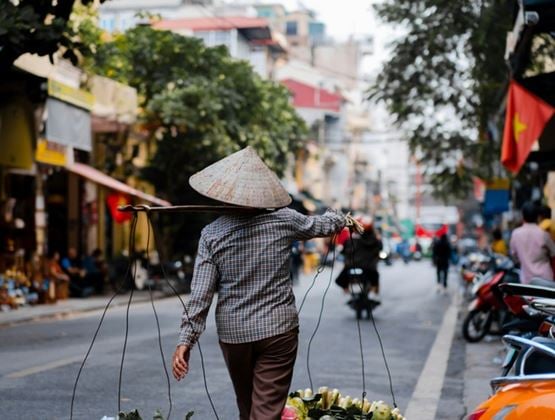
Marriott International’s Future of Food 2026 provides another indication of the appetite for that identity. At its Vietnamese properties, 96% of diners chose Vietnamese cuisine in 2025. It is a useful signal, but one that sits within a much wider movement now visible across tourism, restaurant development and domestic consumption.
The business behind the bowl
The scale becomes clearer away from the dining table. USDA Foreign Agricultural Service estimates show Vietnam’s food processing industry reaching $88 billion in 2025, an increase of 11%. Foodservice sales rose by around 15% to $33.2 billion, while food retail approached $72 billion. Consumer-oriented food imports reached $16.29 billion in a country of almost 102 million people.
The opportunity also runs in the opposite direction. Vietnamese ingredients are gaining value abroad. EU agri-food imports from Vietnam rose 38.8% in 2025 to €5.33 billion. Coffee, tea, cocoa and spices represented almost two-thirds of the total, while fruit and nuts accounted for a further €1.07 billion. This places familiar elements of Vietnamese food culture inside an increasingly substantial international trade flow.
Vietnam is consequently becoming interesting on several levels at once. It is a destination where food attracts visitors, a domestic market where modern retail and foodservice are expanding, a manufacturing base building stronger brands and an exporter of ingredients already embedded in global consumption.
SIAL Vietnam meets a market in motion
That convergence provides the backdrop for SIAL Vietnam, which will make its debut from 11 to 14 November 2026 at the Saigon Exhibition and Convention Center in Ho Chi Minh City. Co-located with Vietnam Food Expo, the new food industry trade show in the SIAL Network will bring together areas including fine food, beverages, fruit and vegetables, seafood, ingredients, coffee and tea, food technology and distribution.
The connection with Vietnam’s culinary rise is particularly relevant. A cuisine does not become internationally influential through restaurants alone. Behind it sit farmers, processors, ingredient businesses, beverage companies, packaging specialists, distributors, retailers and exporters. SIAL Vietnam places those different parts of the value chain in the same market at a moment when Vietnamese food is gaining attention both at home and overseas.
Vietnam’s position as one of Asia’s most compelling culinary destinations may have been built plate by plate. Its next stage is increasingly being shaped at industrial scale, and the SIAL Network is arriving just as the two stories begin to meet.
Image credits:
Duy Nguyen - pexels
Eirik Skarstein - Unsplash
Elric Pxl - Unsplash