
INDIA’S FROZEN FOOD MARKET HEATS UP

For years, the freezer in India was largely a commercial tool. Quick-service restaurants relied on frozen French fries, patties and appetisers to deliver standardisation at scale, while household consumption remained more limited. Today, that distinction is beginning to blur. A packet of momos ordered for an evening snack, frozen peas added to dinner or parathas delivered from a nearby dark store can place frozen food much closer to the rhythm of everyday eating.
The shift does not mean India is suddenly adopting the large freezer aisles familiar in some Western markets. Its development is following a distinctly Indian path, shaped by vegetarian diets, regional tastes, smaller household storage spaces and, increasingly, digital retail.
Quick commerce creates a freezer aisle without the supermarket
One of the most important developments is happening not inside stores, but on smartphones. Redseer Strategy Consultants estimates that frozen ready-to-cook sales through India’s leading quick-commerce platforms reached around $376 million in 2025, an increase of 88% from the previous year. Vegetarian products represented approximately 47% of the category, while frozen vegetable snacks and peas together accounted for around 40%.
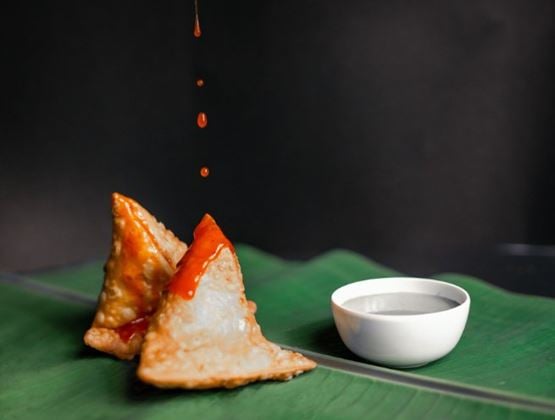
The fastest-moving products tell a more specifically Indian story. Frozen food is not expanding only through imported meals or restaurant-style indulgence, but through familiar staples such as aloo tikki, mini samosas, peas and Indian breads.
Quick commerce also tackles one of the category’s longstanding distribution obstacles. Maintaining freezers across thousands of traditional neighbourhood stores is expensive and operationally complex. Centralised dark stores, fulfilment hubs dedicated to online orders, can concentrate refrigerated infrastructure and give brands access to consumers without requiring a freezer in every local kirana, or neighbourhood grocery shop.
The infrastructure behind the channel is expanding rapidly. Redseer counted around 6,280 dark stores in January 2026, compared with approximately 5,990 a month earlier. Its more recent research projects India’s overall quick-commerce market could rise from around $13 billion in FY2026 to between $70 billion and $90 billion by FY2031.
For frozen suppliers, speed is therefore only part of the attraction. Quick commerce is effectively creating thousands of small digitally connected freezer aisles.
More Indian homes can store frozen food
Faster delivery only expands the market if consumers have somewhere to keep what arrives. Here too, the conditions are changing. Refrigerator ownership, an important proxy for household frozen-storage capacity, has risen sharply over the past decade, particularly in urban India.
The latest available government data shows ownership increasing from 43.8% of urban households in 2011-12 to 68.1% in 2023-24. Rural ownership rose even faster from a much lower base, climbing from 9.4% to 33.2%. More recent research from the Centre for Monitoring Indian Economy suggests that urban households accounted for almost all the growth in refrigerator ownership during the quarter ending September 2026, while rural growth had nearly stalled.
The direction of travel points to a much larger addressable market. NITI Aayog projects refrigerator ownership to reach 90% of urban households and 80% of rural households by 2047. As storage capacity spreads, frozen products gain more opportunities to move beyond immediate-consumption purchases and become part of planned household shopping.
That shift also gives manufacturers room to think beyond the familiar QSR staples.
From fries and nuggets to a much broader basket
Foodservice remains an important foundation for frozen food. QSR operators need consistent portioning, year-round supply and products that can be prepared rapidly. Yet household demand creates room for a far more varied portfolio.
Frozen vegetables and potato products retain obvious potential, but India’s ready-to-cook market increasingly stretches across momos, samosas, kebabs, cutlets, parathas, breads and regional snacks. Redseer’s quick-commerce data also identifies smaller categories ranging from Amritsari kulcha and kathi rolls to dough sheets and millet khichdi.
The result is a category that can move between several eating occasions. The same freezer can provide an after-school snack, a side dish, an emergency breakfast or something for guests. This flexibility may prove particularly important in a market where convenience does not necessarily mean replacing home cooking altogether.
There is also scope for greater experimentation. Pan-Asian products, premium appetisers, seafood and meat-based snacks can address consumers looking for restaurant-style experiences at home, while vegetarian formulations offer considerable scale. Health, ingredient transparency and nutritional positioning are likely to matter too. Research into India’s wider ready-to-eat and ready-to-heat market points to taste, health and trust as important barriers to more frequent consumption.
For food innovation exhibitions, that breadth makes frozen food increasingly interesting because innovation is no longer confined to the product itself. Portion formats, air-fryer compatibility, packaging, recipe localisation and preparation time all become part of the proposition.
Cold chain remains the test behind the opportunity
A frozen category can only expand as far as its temperature-controlled network allows. India is making substantial investments in that foundation, although gaps remain across a vast and geographically diverse market.
India’s Ministry of Food Processing Industries reported in October 2025 that 395 integrated cold-chain projects had been approved under its relevant government programme since 2008, of which 291 were operational. Together, those projects had created 25.52 lakh tonnes of annual preservation capacity and 114.66 lakh tonnes of annual processing capacity.
A separate government-backed assessment by CRISIL Intelligence estimated India’s cold-storage market at ₹426 billion in FY2024 and projected growth of 10% to 13% annually over the following four financial years.
For suppliers, that makes route-to-market strategy as important as recipe development. Products need packaging that tolerates handling through multiple logistics stages, clear storage instructions and distribution partners capable of maintaining temperature integrity. National ambitions may also need to be built city by city, rather than through a single launch model.
A market moving from availability to habit
The next chapter for frozen food in India will depend on whether growing availability turns into regular household behaviour. That requires suppliers to think beyond the QSR specification sheet and understand what Indian consumers actually want from their freezers: convenience, certainly, but also familiar flavours, value, reliable quality and products suited to everyday cooking.
These questions will be increasingly relevant when theSIAL Network brings SIAL India to Mumbai from 24 to 26 June 2027 at the Jio World Convention Centre. The food industry trade show is expected to connect domestic and international businesses across retail, foodservice, hospitality, distribution, e-commerce and manufacturing.
India’s frozen opportunity is therefore becoming less about whether consumers will accept frozen food and more about where, when and how they will use it. For manufacturers able to combine the right products with localised distribution and dependable cold-chain execution, the freezer may be moving from the back of the restaurant kitchen to a much more valuable place in daily life.
Image credits: Shreyak Singh - Unsplash, Cleverdis