
THE WORLD IN A SHOPPING BASKET

A passport, suitcase and long-haul flight are no longer essential for a journey through the world’s kitchens. A weekly supermarket shop can begin with Korean gochujang, pass through Venezuelan arepas and Indian paneer, then finish with Japanese noodles or a jar of North African harissa.
Behind that culinary itinerary lies a significant shift in food retail. Migration continues to create demand for familiar tastes, but supermarkets are also serving consumers whose interest in international cuisine comes through restaurants, travel, streaming culture and social media. The result is a grocery environment in which foods once concentrated in specialist shops are increasingly entering mainstream ranges.
From the international aisle to the everyday shop
North America illustrates how quickly that transition is taking place. In Canada, NielsenIQ figures for 2025 showed a 14% increase in frozen food sales at ethnic grocery retailers, alongside growth of 11% in non-alcoholic beverages and 10% in confectionery and snacks. Meanwhile, Agriculture and Agri-Food Canada reported that retail sales of Chinese frozen ready meals grew by approximately 7% between 2024 and 2025. Together, these figures highlight the growing commercial appeal of international cuisines, as suppliers increasingly look beyond traditional diaspora markets to reach a wider consumer audience.
Asian cuisine has become particularly influential. Technomic research found Asian dishes on 61% of Canadian restaurant menus in 2025, helping reinforce consumers’ familiarity with flavours that subsequently migrate into home cooking.
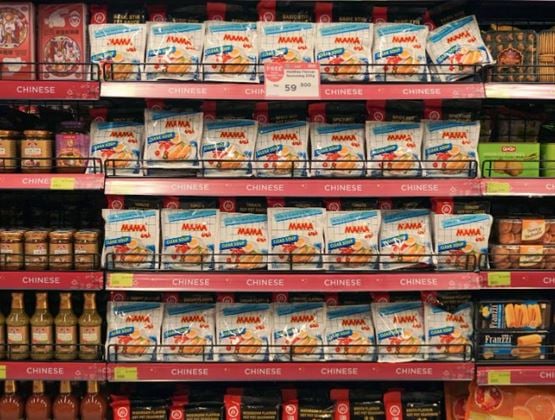
Retailers are adapting accordingly. FreshCo and Chalo! FreshCo in Canada tailor multicultural assortments to local communities while extending the offer across produce, meat, bakery, frozen food and grocery rather than restricting it to a single international section. Suppliers also report retailers placing Asian sauces alongside vegetables and proteins to present shoppers with complete meal solutions.
That distinction is important. An international aisle invites shoppers to visit a destination within the store. Integration makes the cuisine part of the normal route through it.
It also creates opportunities across multiple food industry sectors. A shopper drawn initially to ramen might later encounter frozen dumplings, chilli crisp, seaweed snacks, marinades and ready meals. For manufacturers, a cuisine can therefore evolve from a collection of imported staples into an ecosystem of products stretching across ambient, chilled, frozen and fresh categories.
Latin America moves beyond the specialist shop
A similar story is unfolding in Europe, where Latin American foods have been broadening their audience.
Spain offers an especially visible example. Products including Argentine dulce de leche, Venezuelan tequeños, Mexican foods and Colombian arepas are increasingly moving beyond specialist retailers into mainstream supermarkets. According to figures reported by El Confidencial in September 2025, Mercamadrid, Spain's largest fresh food distribution platform, recorded average annual growth of 6.5% in the volume of Latin American foods handled over the preceding five years. Meanwhile, major retailers such as Carrefour have expanded their international ranges, including dedicated sections for Colombian products, reflecting the growing importance of Latin American cuisine in Spanish grocery retail.
The commercial appeal extends beyond nostalgia. Specialist distributors and manufacturers can initially build volume by serving diaspora communities, giving retailers an established customer base. Wider adoption can then follow when local shoppers encounter the same foods through restaurants, travel or popular culture.
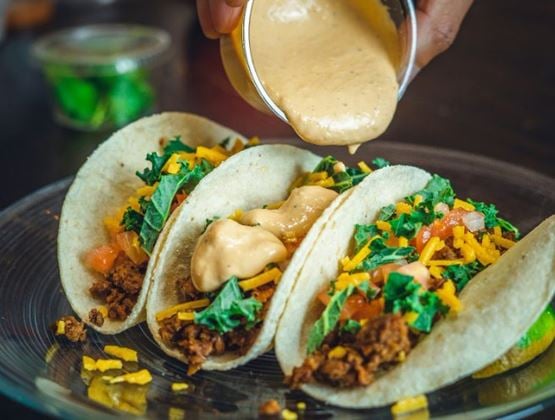
This produces an interesting balancing act for supermarkets. Authenticity remains important to shoppers looking for products associated with home, while unfamiliar consumers may value convenience and accessible formats. The strongest ranges can serve both without reducing an entire region to a handful of generic flavours.
Across Europe, world foods are becoming a larger retail opportunity. IGD estimated the global world foods market at between US$ 70 billion and US$ 80 billion in 2025 and expects it to exceed US$95 billion by the early 2030s. It also points to European retailers increasingly embedding global cuisines throughout stores rather than maintaining them solely as separate categories.
K-food shows how quickly a cuisine can travel
Few cuisines demonstrate this progression as clearly as Korean food.
Kimchi, gochujang and Korean-style noodles once required a visit to an Asian grocer in many European and North American markets. Their distribution footprint is now considerably broader.
In Britain, Waitrose reported in February 2025 that sales of gochujang paste had risen 71% year on year, while online searches for the ingredient increased 572%. By August 2026, online supermarket giant Ocado said sales of one Korean gochujang product had increased 561% year on year. Its research also found that 53% of UK adults regularly bought international ingredients as part of their weekly shop.
Ocado had already responded by creating a dedicated Korean aisle and adding 20 products in 2025, while searches for gochujang paste on its platform rose 7,505% year on year.
Korean manufacturers are adapting products as distribution expands. CJ Foods, for example, introduced squeezable versions of bibigo gochujang and ssamjang in Germany, the UK, France and the Netherlands in 2025, with formulations and packaging intended to make the sauces easier to use as dips, dressings and condiments. This is localisation without necessarily abandoning culinary identity. The ingredient remains recognisably Korean, but the format gives unfamiliar shoppers an easier point of entry.
When discovery becomes routine
The internationalisation of supermarket shelves ultimately reflects two parallel needs. For multicultural communities, the availability of familiar products can turn a mainstream supermarket into a more relevant place to shop. For other consumers, those same shelves provide low-risk opportunities to experiment with cuisines first encountered elsewhere.
The implications reach beyond retail. Importers need stronger supply chains, manufacturers must decide when to export and when to manufacture locally, and brands have to judge how far recipes or formats can be adapted without losing authenticity.
Those questions are increasingly relevant across the international food innovation exhibition circuit, where retailers and producers assess which regional products have the potential to travel. Within theSIAL Network, markets across Europe, North America and Asia offer different perspectives on the same underlying movement: foods can retain a strong sense of place while finding consumers thousands of kilometres from their origins.
The supermarket may never replace the experience of travelling to Seoul, Mexico City or Mumbai. But increasingly, it can provide the first taste that makes those places feel a little closer.
Image credits: Jarett Lopez - Unsplash, FBelladona - Unsplash