
SIAL MUMBAI ENTERS A NEW GLOBAL ERA WITH LANDMARK TRADE AGREEMENTS

On 27 January 2026, the European Union and India reached a landmark Free Trade Agreement (FTA) that both sides describe as one of the most ambitious and far-reaching commercial pacts of the decade. The agreement, concluded at the 16th India-EU Summit in New Delhi after almost two decades of negotiations, is poised to transform the economic relationship between the EU’s 27 member states and India. It brings together economies representing nearly a quarter of global gross domestic product and a combined market of around two billion consumers. While the agreement spans industrial goods, services and investment, its implications for food, beverages and farming are particularly significant.
India is already one of the EU’s most important trading partners, with bilateral trade in goods reaching over €120 billion in recent years, and agri-food exchanges forming a growing share of that total. At the same time, India’s domestic food market is expanding rapidly, supported by rising urbanisation, a growing middle class and shifting consumption patterns. Against this backdrop, the new agreement provides a framework for gradually reducing tariffs, improving regulatory transparency and strengthening cooperation across the food sector.
Lower barriers for food and beverage trade
At the heart of the agreement lies a substantial reduction in tariffs. According to the European Commission, India will eliminate or significantly reduce tariffs on approximately 96 percent of EU exports by value. For European companies, this could translate into savings of up to €4 billion annually in customs duties once the agreement is fully implemented.
For agri-food and beverage exporters, the implications are particularly significant. India has traditionally maintained high import tariffs on many food and drink products, with duties on certain processed foods and beverages often ranging between 30 percent and 100 percent or more. Wine and spirits have historically faced tariffs of up to 150 percent. The agreement introduces phased reductions on a wide range of these products, enhancing price competitiveness for European suppliers.
This shift opens new prospects for premium food brands and alcoholic beverages exhibitors that regularly showcase their products at international events such as SIAL Network’s global platforms. India’s urban consumers are increasingly seeking imported gourmet items, specialty dairy, confectionery, olive oils and innovative drinks. Lower tariff barriers could accelerate the penetration of European products into high-growth metropolitan markets.
The EU will, in parallel, liberalise nearly all of its tariff lines for Indian goods, covering around 99 percent of trade value. Indian exporters of rice, spices, tea, coffee and processed food products stand to benefit, provided they comply with EU sanitary and phytosanitary requirements. The agreement therefore reinforces two-way opportunities rather than a one-sided opening.
Protecting sensitive farm sectors
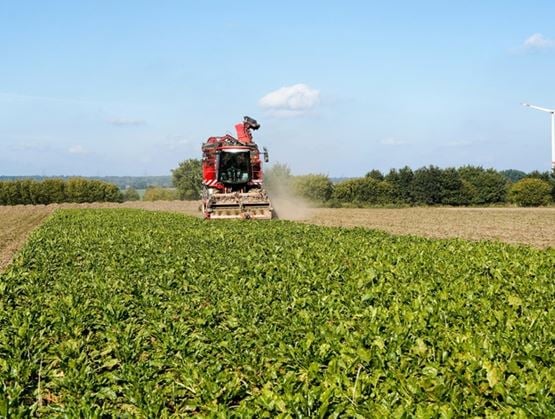
While the agreement promotes liberalisation, it also contains clear safeguards for sensitive agricultural sectors. European farmers have expressed concerns about competition in areas such as beef, sugar and poultry. The final text reflects a calibrated approach.
Christophe Hansen, European Commissioner for Agriculture and Food, addressed this balance directly in the official communication. He stated: “Front and centre to these negotiations, was maximizing new opportunities for our unmatched European products, while protecting European farmers. That is why the tariffs on the most sensitive products such as beef, sugar, ethanol, rice and poultry will remain in place. As in any trade agreement, our high food safety standards are fully maintained. The safety of EU consumers is non-negotiable.”
Equally important is the reaffirmation that EU food safety standards remain intact. For stakeholders across the food industry trade show circuit, including buyers and exhibitors at SIAL events, regulatory integrity is central to maintaining consumer confidence. The agreement does not dilute EU sanitary and phytosanitary requirements, meaning imported products must continue to meet strict traceability, safety and labelling rules.
Implications for farming, processing and global supply chains
India’s agricultural sector employs a substantial share of its workforce and contributes significantly to rural livelihoods. At the same time, the country’s food processing industry is expanding rapidly, supported by domestic demand and government investment in infrastructure. Improved access to European technologies, ingredients and machinery may stimulate productivity gains in Indian processing operations.
For European suppliers of agri-food technology, cold chain systems and specialised ingredients, the agreement opens further opportunities in a market of more than 1.4 billion people. The combination of tariff reductions and enhanced customs cooperation may help reduce transaction costs and shorten delivery times, particularly for processed and packaged goods.
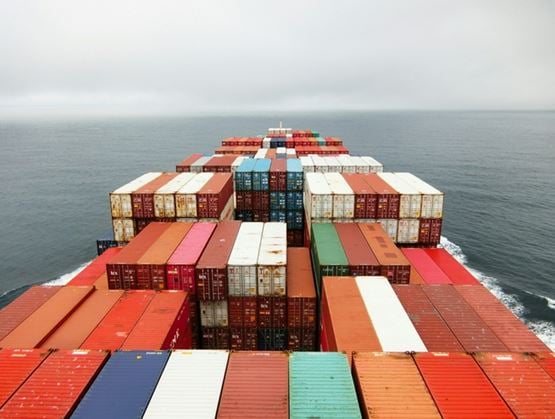
The broader geopolitical context also matters. At a time of supply chain disruptions and shifting trade alliances, the creation of a free trade area encompassing two billion consumers strengthens diversification and resilience. For global companies active in sourcing, distribution and brand development, the EU-India corridor is likely to become increasingly strategic.
Within the SIAL Network ecosystem, where international buyers and producers converge to identify growth markets and innovation trends, the agreement adds a new dimension to commercial dialogue, particularly at SIAL India.
SIAL Mumbai 2026: A global stage for food innovation and trade
From 10 to 12 April 2026, the SIAL Mumbai food and beverage exhibition will return to the Jio World Convention Centre in Mumbai, India’s financial capital and a key nexus of international commerce.
As the flagship international B2B food & beverage event in the country, SIAL Mumbai exemplifies the growing international reach of the SIAL Network, drawing buyers, producers and innovators from around the world. The 2026 edition is expected to feature over 400 exhibitors representing more than 50 countries, alongside more than 12,000 trade visitors and a robust programme of business meetings, hosted buyer sessions and trend-focused showcases.
A central highlight of the show is SIAL Innovation, a platform where groundbreaking food and beverage products from diverse markets are presented to an international audience. Celebrating creativity, sustainability and commercial potential, SIAL Innovation showcases offer exhibitors a chance to elevate their profile while reflecting broader industry trends in formulation, packaging and positioning.
The event also serves as a dynamic meeting ground for a wide spectrum of industry stakeholders, from importers, distributors and retail chains to foodservice operators and institutional buyers. With live cooking demonstrations, hosted buyer programmes and curated conference sessions woven throughout the three days, SIAL Mumbai fosters direct engagement across market entry, sourcing and partnership development.
In the context of the newly concluded EU-India FTA, SIAL Mumbai amplifies the treaty’s potential by creating a real-world platform where European exporters and Indian buyers can meet face-to-face, explore opportunities and build lasting commercial relationships. It offers a timely, tangible complement to policy-level trade opening, underscoring how regulatory progress and marketplace activity together accelerate the integration of global food and beverage value chains.
Image credits:
Wolfgang Weiser - Unsplash
Rinson Chory - Unsplash