
THE NEW GRAB-AND-GO GASTRONOMY

At lunchtime in Tokyo, a restaurant does not always have a host, a menu or a door that opens onto a dining room. It may have fluorescent lighting, a payment terminal, a row of hot cabinets and a shelf of neatly wrapped onigiri. The Japanese konbini has long been treated by travellers as a minor miracle of urban food culture, but the model now looks less like a curiosity and more like a signal. Across Japan, South Korea and Taiwan, and increasingly in Europe, convenience stores are no longer simply selling snacks between meals. They are competing for the meal itself.
When the corner shop became a kitchen
Japan remains the reference point. In 2025, sales from the country’s seven major convenience-store chains reached a record ¥12.06 trillion (around €65.1 billion), supported by higher-value products, tourism and the continued pull of ready-to-eat food. At 7-Eleven Japan, the appeal lies not only in availability but in product discipline: egg sandwiches, rice balls, fried chicken, chilled noodles, bento boxes and desserts that feel designed rather than merely stocked.
Seven & i Holdings has made the direction explicit. Its international business is moving towards a “food-focused convenience store” model tailored to each market. The strategy is travelling. In Australia, 7-Eleven has promoted Japanese-style products including onigiri, sushi, egg salad rolls and gyoza, with sushi and onigiri average daily sales per store rising by 70% from 2024 to 2025.
The result is a subtle change in consumer expectation. A convenience store meal is no longer judged only against other convenience stores. It is judged against quick-service restaurants, cafés, casual lunch counters and, increasingly, the office canteen.
Asia’s small stores, big appetites
South Korea has added its own rhythm to the format. Chains such as CU, GS25 and Emart24 have become part of the wider K-food ecosystem, combining private-label meals, limited-edition collaborations, microwaveable lunch boxes and social-media-friendly snacks. In 2026, CU’s food ingredient category sales had recorded double-digit growth for three consecutive years, rising 24.2% in 2023, 18.3% in 2024 and 18.7% in 2025, while GS25 expanded its fresh-food-enhanced stores to 836 in 2025 and aimed to exceed 1,100 in 2026.
Taiwan shows a slightly different but equally powerful version of the same idea. There, convenience stores operate as food outlets, service counters, study spaces and neighbourhood infrastructure. With more than 14,000 convenience stores serving a population of around 23 million, chains including 7-Eleven, FamilyMart, Hi-Life and OK Mart have become woven into daily life, offering hot food, bento meals, tea eggs, seating areas and digital services around the clock.
This density is important. Small homes, long working hours and high urban footfall turn the store into a practical extension of the kitchen. The meal is not an emergency purchase. It is a planned choice.
The influencer effect moves down the street
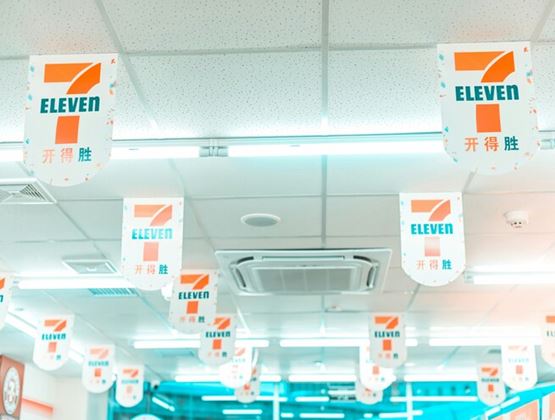
The cultural conversation has followed the consumer. Food influencers who once built audiences through restaurant openings and tasting menus are increasingly filming convenience-store hauls, late-night snack tests, konbini breakfasts and “what to eat at 7-Eleven” guides. The format works because it is democratic and visual. A new sandwich, noodle bowl or dessert can be understood in seconds, bought by almost anyone and repeated by viewers the same day.
This has made convenience retail a surprisingly efficient product-testing theatre. For brands, the shelf can act like a miniature food innovation exhibition, where packaging, price, flavour and novelty are judged quickly by shoppers and amplified online. For retailers, viral attention gives private-label food a cultural value that traditional grocery rarely achieved. The product is not just convenient. It is content.
That also explains why the boundary with restaurants is becoming harder to draw. A restaurant sells preparation, atmosphere and service. A modern convenience store sells speed, predictability and an increasingly credible meal experience. In dense Asian cities, the difference may matter less than the occasion: breakfast before the train, dinner after work, a hot snack at midnight, a dessert shared online before it is eaten.
Europe watches the konbini model
Europe has not replicated Asia’s convenience-store culture at the same intensity, but the direction is visible. The UK convenience market was forecast to grow by 3.1% in 2025 to £48.8 billion (around €57.2 billion), supported by investment in fresh, chilled and food-to-go categories. Co-op’s 2025 launch of smaller “On The Go” stores, focused on hot food, prepared meals, sandwiches and delivery, shows how British retailers are borrowing ideas from Asian convenience culture while adapting them to local commuting and delivery habits.
The wider European ready-meals market also supports the shift. It was valued at USD 29.89 billion in 2025 and expected to reach USD 31.56 billion in 2026, with growth linked to busy households and demand for convenient meal solutions. For convenience retailers, that creates room to move beyond crisps, confectionery and soft drinks into warm food, chilled meals, premium sandwiches, functional drinks and healthier snacks.
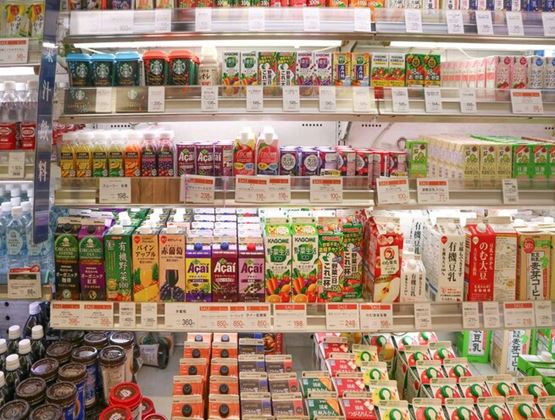
The strategic question is not whether convenience stores will replace restaurants. They will not. It is whether they will absorb more meal occasions that once belonged to cafés, bakeries, quick-service chains and casual dining. In many markets, that is already happening.
For the global food industry trade show circuit, the rise of the convenience-store restaurant is a reminder that innovation does not only happen in fine dining or premium grocery stores. It happens in compact stores with rapid turnover, localised menus and unforgiving customers. Across the SIAL Network, this convergence between retail and foodservice is likely to remain one of the clearest signals of where everyday eating is heading next.
Image credits
Yang Miao - Unsplash
Joan Tran - Unsplash