
INNOVATION STARTS WITH INGREDIENTS

With so much to discover at SIAL Paris, how can visitors identify the innovations and trends that matter most to their business? For the 2026 edition, the thematic routes have been designed to help professionals explore the show through some of the industry’s key challenges and opportunities, with selections curated alongside food industry experts.

Among them is Sophie de Reynal, Marketing Director at NutriMarketing, who helped develop the routes dedicated to Children and Seniors’ nutrition and Intermediate Food Products. Specialising in innovation intelligence, she monitors everything from emerging ingredients and new products to consumer expectations, scientific and regulatory developments and the wider forces reshaping the sector.
In this interview, she focuses particularly on Intermediate Food Products. Less visible than finished products, these ingredients and intermediate goods nevertheless sit at the very beginning of the innovation process. Clean label, protein, plant-based alternatives, upcycling, personalisation and artificial intelligence are among the trends showing how today’s ingredients are already shaping tomorrow’s food products.
Why is it particularly relevant for SIAL Paris to dedicate a thematic route to Intermediate Food Products this year?
Although SIAL Paris is best known as the world’s leading food exhibition for finished products, it is also one of the largest showcases for intermediate food products. An exhibitor selling olive oil in a one-litre bottle, for example, may also supply it in quantities of 10, 100 or 1,000 litres to manufacturers. The same applies to cheese, tomato sauce, sugar, salt and many other products.
At NutriMarketing, one of our guiding principles is: “Today’s new ingredient will become tomorrow’s new product.”
Intermediate goods sit right at the upstream end of innovation and respond very quickly to emerging consumer trends. When cocoa and pistachio prices soar, more affordable and sustainable substitutes emerge. When the egg market comes under pressure, plant-based alternatives multiply.
What are the main trends currently shaping ingredients and Intermediate Food Products?
Suppliers of intermediate goods anticipate trends, regulatory changes and market fluctuations so they can bring new solutions to their customers. Major trends include plant-based alternatives, clean label formulations with fewer artificial or ultra-processed ingredients, reductions in sugar and salt and, to a lesser extent, fat, as well as the continued protein boom, spanning animal and plant proteins, yeast and fermentation-derived solutions.
Upcycled ingredients are also attracting considerable attention because they create value from what would otherwise be waste, while helping reduce the environmental impact of production.
Are there any key figures or market data that demonstrate the strategic importance of Intermediate Food Products to the food industry?
Reliable market data for ingredients and intermediate goods is extremely difficult to obtain. Take flour, for example: you would need to separate the volumes sold directly to consumers from those supplied to manufacturers and those going to mills. The same applies to spices. They might be sold directly to consumers or supplied to a manufacturer for use in a tomato sauce, some of which could then be sold B2C and some B2B.
Some market research companies nevertheless attempt to put a figure on the sector. According to Fortune Business Insights, the global food ingredients market was valued at $286.65 billion in 2025. It is forecast to grow from $302.56 billion in 2026 to $487.51 billion by 2034, representing a CAGR of 6.14%. However, it is not always clear exactly how these figures are calculated.
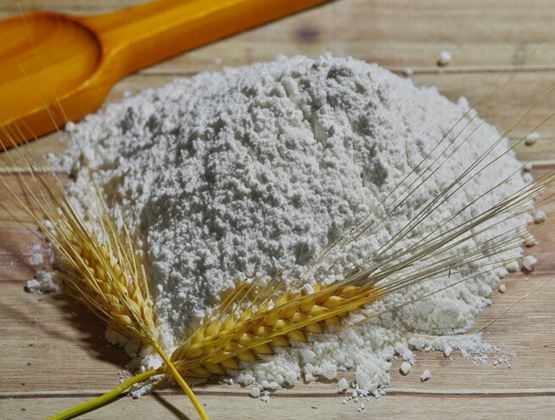
What is clear, however, is that more companies are developing dedicated supply chains, both to secure access to key ingredients and to meet CSR requirements around local and sustainable sourcing and environmental certification.
How do Intermediate Food Products help manufacturers develop new products faster, more consistently and with greater confidence?
Thirty years ago, suppliers would offer the same catalogue of standardised products to every customer. Today, they increasingly co-create formulations with their clients, developing tailored ingredients that take account of regulatory, technical, economic and ethical requirements.
Which regulatory or technical constraints have the greatest impact on the development of new ingredients today?
In Europe, the Novel Food regulation is one of the biggest constraints facing the food industry in general and suppliers of intermediate food products in particular. It requires foods that were not consumed to a significant degree before 1997 to demonstrate their safety before being placed on the market.
This applies both to foods that may already be consumed elsewhere in the world, such as baobab pulp or insects, which have had to go through the Novel Food process, and to products derived from new technologies.
There has been a great deal of discussion around cultivated meat, or lab-grown meat, which was first developed by a Dutch company but is still not authorised for human consumption in Europe under the Novel Food framework. It has, however, been authorised in markets including Singapore, the United States and Israel, while the UK has authorised its use in pet food.
The same challenge applies to precision fermentation. Europe is home to pioneering companies in this field, yet current regulations continue to limit the use of some of the ingredients these technologies can produce.
Is the growing debate around ultra-processed foods forcing suppliers of Intermediate Food Products to rethink how they position their products?
Suppliers are developing solutions for manufacturers looking to reduce both the level of processing and the length of their ingredient lists. The challenge is that ultra-processed formulations are often less expensive than more natural alternatives. The question is whether manufacturers, and ultimately consumers, are willing to pay the difference.
What will the intermediate food product of tomorrow look like: more natural, functional, local, technological or sustainable?
Tomorrow’s intermediate goods will be even more personalised than they are today, helped by the growing use of AI across the sector. If a manufacturer is looking for a particular protein for a plant-based alternative, for example, AI could instantly identify the two or three suppliers whose solutions are best suited to that formulation. The same could apply to probiotic strains, peptides, egg alternatives and many other ingredients.
Precision-fermentation ingredients are also set to open up new market opportunities.
Image credits:
Immo Wegman - Unsplash