
INSTANT FOOD GROWS UP IN ASIA

The defining feature of instant food used to be what it removed: cooking time, effort and, frequently, cost. A product had succeeded if it could sit in a cupboard for months and become something hot within minutes.
That proposition remains powerful, but the category surrounding it is changing. Instant noodles still occupy an important position, particularly in Asia, yet they are increasingly one format within a much larger convenience system. Microwaveable rice, soup cups, shelf-stable curries, instant porridge, quick-cook pasta, self-heating dishes, coffee sachets and nutritionally formulated drinks are all competing for moments when consumers want food quickly without necessarily wanting the cheapest possible option.
The market is too dispersed to sit neatly inside a single statistical definition. Its scale becomes clearer when adjacent categories are viewed together, and Asia is where many of them are expanding simultaneously.
A market stretching across meals, rice, soup and drinks
The Asia-Pacific ready meals market was worth an estimated USD 40.96 billion in 2025. China alone represented around USD 15.56 billion, making it the region's largest national market. India reached USD 7.38 billion in 2025, with growth forecast at 6.41% annually through 2034, while Japan's ready meals market stood at USD 6.13 billion and is projected to expand at 6.4% a year over the same period.
Those figures capture only part of the instant-food economy. Rice, for example, is becoming a substantial convenience category in its own right. Asia-Pacific generated USD 3.77 billion in instant rice sales in 2025, accounting for almost 80% of the global market. China, India, Japan, South Korea, Thailand and Vietnam are among the markets where established rice-eating habits give manufacturers room to develop cups, trays and heat-and-eat dishes without asking consumers to change the foundation of the meal.
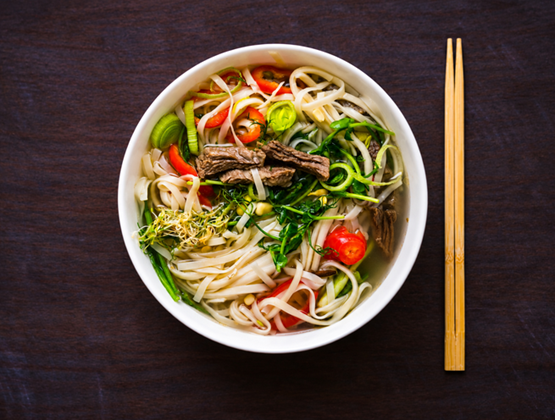
Soup is following a similar path. The Asia-Pacific instant soup market reached USD 1.38 billion in 2025 and is forecast to grow at just over 5% annually through 2034. Cup and bowl formats led the market, while packet and dry soups are expected to deliver particularly strong growth.
Instant beverages make the category wider still. Asia-Pacific's instant coffee market generated USD 22.74 billion in 2025 and is forecast to grow by 6.25% annually to 2033, with sachets expected to be the fastest-growing packaging format. The same logic of portion control, portability and minimal preparation that shaped instant food is therefore extending well beyond the plate.
Different markets, different convenience consumers
The appeal of instant food is not uniform across Asia. In mature markets, demographic change is altering portion sizes and nutritional expectations. In South Korea, single-person households represented 36.1% of all households in 2024, with more than two-fifths of them located in Seoul and Gyeonggi. Products that can provide one portion without leftovers naturally fit that household structure.
Japan combines similar demand for individual portions with an ageing population and established convenience retail. Ready-meal purchasing is increasingly shaped by busy professionals, seniors and consumers seeking healthier individual meal options. This helps explain why convenience innovation is moving towards better nutritional balance and formats that reduce cooking without abandoning the expectation of meal quality.
India presents a different picture, with penetration still developing rapidly. Ready-to-cook foods recorded 58% growth in 2024 and added 18 million households, substantially outpacing the wider packaged-food market. Urbanisation, smaller families and dual-income households are expanding the audience for convenient meals, while price sensitivity means mass-market accessibility remains critical.
Indonesia brings youth and urban consumption more clearly into view. Demand for meals and soups is being supported by busy urban consumers looking for quick, tasty and increasingly nutritious options, while research into frozen ready-made meals has identified Millennials and Generation Z as particularly relevant consumer groups. A 2025 study of 249 Indonesian consumers linked adoption among younger adults closely to urbanisation and convenience.
Technology changes what “instant” can taste like
As the audience broadens, manufacturers are having to modernise what happens inside the pack. The challenge for the food processing industry is no longer simply to make food stable and fast. Rice must retain a satisfying texture, vegetables need colour and bite, sauces need greater complexity, and complete meals have to survive processing without tasting uniformly processed.
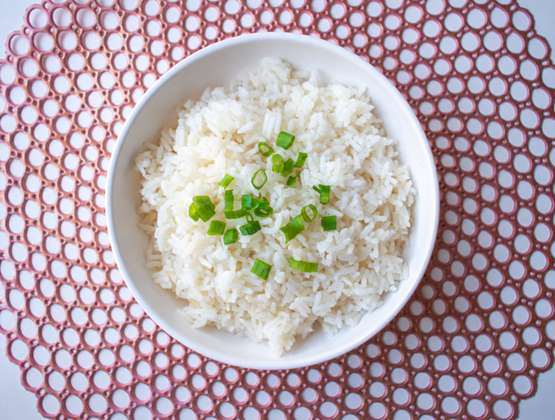
Packaging has become part of that transformation. Pouches can act as cooking vessels, compartmentalised bowls can keep sauces and toppings separate until heating, while self-heating systems remove the need for a microwave or kettle. Freeze-drying and improved dehydration are allowing more recognisable vegetables, proteins and garnishes to return after water is added.
Pasta shows how far the principle can travel. In Japan, Nisshin Seifun Welna introduced an ambient fresh-style pasta designed to be heated in its pouch for two minutes without water or a pan. The product was developed around texture as much as speed, signalling how convenience increasingly has to reproduce qualities associated with freshly cooked food.
Nutrition is becoming another route to differentiation. Nissin's KANZEN MEAL concept has extended convenience into nutritionally formulated meals and even beverages. Its RAPID SHOT drinks were introduced in 2025 as an ultra-fast meal format built around 33 nutrients, showing how the boundaries between meal, snack and beverage are becoming less rigid.
From shortcut to industrial platform
That tension between accessibility and improvement is likely to define the category's next stage. Instant food does not need to become uniformly premium. Low-cost formats remain essential in many markets. Instead, the category is stretching, accommodating value products at one end and increasingly complete, differentiated meals at the other.
For suppliers, that creates opportunities well beyond finished products. Grains, proteins, vegetables, broths, flavours and functional ingredients all have a role, as do drying technologies, retort systems, portioning equipment and packaging capable of heating, venting or separating different components.
It also gives the food innovation exhibition a particularly useful perspective on convenience. SIAL Shanghai 2026 brought together more than 5,000 exhibitors and 183,302 professionals in a market where packaged meals, beverages, processing expertise and rapid product development meet at scale.
Instant food was once designed primarily to save time and money. Increasingly, the industrial challenge is to preserve those advantages while making the meal itself worth choosing.
Image credits:
IARA MELO - Pexels
Kirill Tonkikh - Unsplash