
SIAL SHANGHAI BRIDGES CHINA AND GLOBAL MARKETS

Early summer in Shanghai brought renewed momentum to the global food and beverage sector as SIAL Shanghai closed on 20 May with strong business activity, international participation and a clear focus on trade efficiency. The event gathered professionals from 132 countries and regions and generated more than USD 14 billion in intended deals, reinforcing its position as one of Asia’s leading food and beverage platforms.
For international and Chinese companies alike, the exhibition offered more than visibility. It provided access to a dense network of buyers, distributors, retailers, foodservice operators and emerging channels at a time when China’s food market continues to evolve rapidly. From multinational procurement groups to regional distributors, from supermarket chains to live-stream e-commerce, the show reflected the diversity of today’s route to market.
A strong trade platform for China and the world
SIAL Shanghai’s commercial strength was visible in the range of buyers present across the show floor. International procurement activity continued to grow, with buyers from Hong Kong, the United States, South Korea, Singapore, Thailand, Vietnam, Indonesia and Australia attending with specific sourcing needs. Their presence highlighted the role of Shanghai as a meeting point not only for China, but also for wider Asian and global food trade.
The domestic buyer base was equally significant. Major Chinese retail and distribution players, including ALDI China, Dingdong Maicai, Yonghui Fresh Food, Aeon, Hotmaxx, SPAR China, JD.com, Rainbow and Freshippo, were joined by delegations from 58 business associations and 102 wholesale markets across 72 cities in 21 provinces, municipalities and autonomous regions. Together, they created a broad procurement network spanning traditional retail, wholesale, fresh food distribution, e-commerce and new consumption channels.
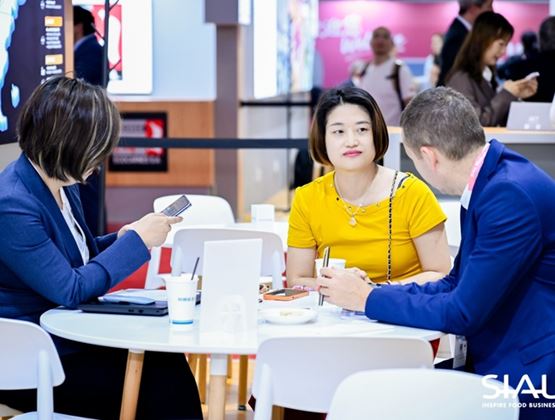
This business activity was supported by enhanced matchmaking tools. Through the Match Me supply-demand service and the “SIAL AI CEO” smart tool, the exhibition recorded 13,978 precision business matching sessions. These meetings helped exhibitors and buyers move quickly from discovery to negotiation, supporting cross-border orders, agricultural export opportunities, annual supermarket contracts and collaborations with emerging retail channels.
A broad showcase of global and Chinese products
This year’s edition brought together more than 5,000 food and beverage brands from 75 countries and regions, with over 350,000 exhibits across categories. The international offer included products from countries and regions such as France, Italy, Ireland, Spain, Turkey, Belgium, Poland, Switzerland, Russia, the United States, Argentina, Brazil, Peru, Canada, Chile, Australia, South Korea, Japan, Malaysia, Thailand, India, Indonesia and Vietnam.
At the same time, SIAL Shanghai gave strong visibility to Chinese regional specialities and domestic brands. Provincial agricultural products from across China were presented alongside companies active in snacks, ready-to-eat meals, grains and condiments, fresh ingredients, beverages, dairy products, baked goods and light meals. This balance between global sourcing and domestic production helped position the event as a two-way platform: bringing international products into China while supporting Chinese brands in their expansion abroad.
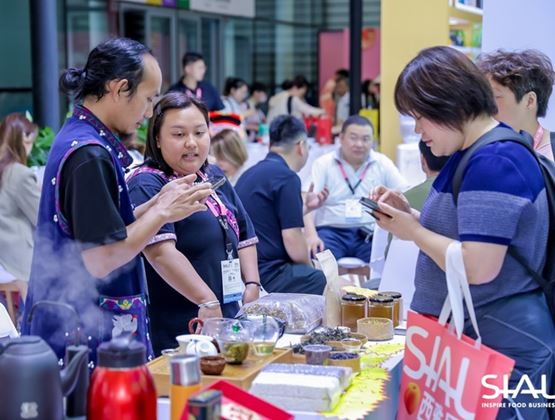
For buyers, the scale of the offer created a one-stop sourcing environment. For exhibitors, it offered a route into China’s complex and highly competitive distribution landscape. The presence of both traditional channels and fast-growing new formats also reflected how food consumption in China is being reshaped by convenience, quality, value and digital commerce.
Innovation points to changing consumer priorities
Innovation was a central theme throughout the exhibition. A record 12,152 new products made their debut, with several trends standing out across the show floor. Clean labelling, food-medicine dual-purpose products, plant-based development and personalised nutrition all featured prominently, pointing to stronger demand for health-oriented, functional and more transparent food solutions.
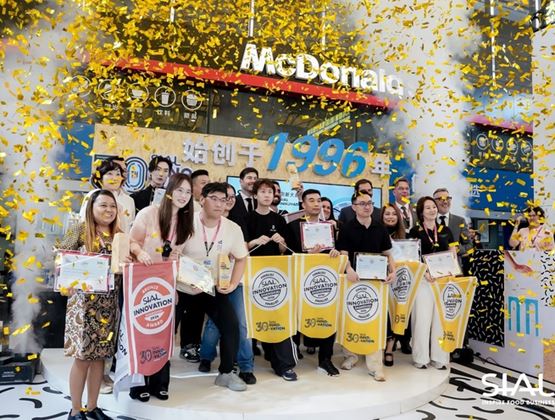
SIAL Innovation also marked its 30th anniversary, further reinforcing the exhibition’s role as a benchmark for food and beverage creativity. This year, the competition attracted 684 entries from 22 countries and regions, evaluated according to five criteria: pleasure, health, wellness, convenience and sustainability. The gold, silver and bronze awards went respectively to TRUE ACAI from Brazil, PT Ramantha Kawanua Indonesia and Suzhou YOUI Group. The winning products will be showcased across the global SIAL exhibition network, giving them additional international visibility.
The foodservice and catering sectors were also strongly represented. The SIAL Supply Chain area brought together high-end ingredients, grains and condiments, frozen foods, pre-processed foods and light baked goods, offering solutions for restaurant chains, group catering and fresh supermarket sections. In a competitive dining market, where operators are under pressure to improve efficiency while maintaining product quality, this part of the show reflected the growing importance of reliable, flexible and scalable supply chains.
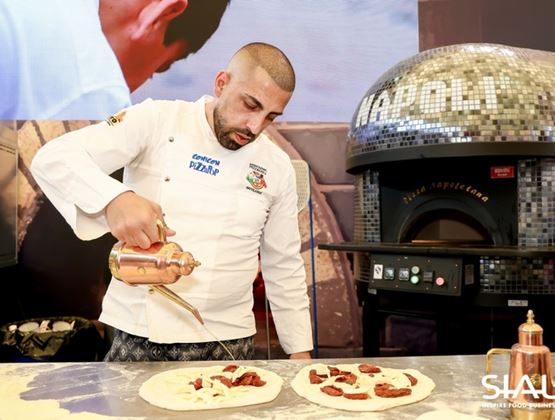
Specialised areas also gave visitors a closer look at changing food cultures and consumption occasions. The Tutto Pizza International by SIAL zone combined the heritage of Neapolitan pizza-making with local creativity through demonstrations, tastings and technical exchange. Meanwhile, the launch of the 2026 New Chinese Light Food Development White Paper highlighted three macro trends shaping the light meal market: Chinese-style formats, hot-served products and functional light meals.
From Shanghai to Guangzhou
Beyond product discovery and deal-making, SIAL Shanghai also served as a forum for industry thinking. The programme featured 20 summits and professional competitions, covering market insights, technology, skills and consumer experience. The 8th SIAL Global Food Industry Summit addressed topics including trade policy, chain restaurant solutions and product creation, while competitions such as the SIAL CUP Barista Challenge, SIAL Chic & Tea Contest, SIAL Snacking Awards, SIAL La Cuisine and SIAL Best Steak Awards brought additional energy to the event.
Following the Shanghai edition, SIAL’s China momentum now moves south to Guangzhou. From 3 to 5 September, SIAL Guangzhou will take place at the Poly World Trade Center Expo, with a focus on the Guangdong-Hong Kong-Macao Greater Bay Area and its connection to Southeast Asian markets. The event is designed to help exhibitors strengthen their presence in South China, access regional distribution channels and develop business opportunities across ASEAN.
This dual-city strategy gives food and beverage companies two complementary platforms in China: Shanghai as a global showcase for brand visibility and trade connection, and Guangzhou as a gateway to the Greater Bay Area and wider Asian growth.
SIAL Shanghai’s performance also sits within the broader reach of the SIAL Network, which connects food professionals through major events around the world. Together, these shows form a global ecosystem for sourcing, innovation and business development across the food sector, helping companies follow market opportunities from one region to another.