
THE DELICIOUS FLAVOURS OF DIWALI

The scent of cardamom, saffron and warm ghee fills kitchens across India as preparations begin for Diwali. Trays of golden laddoos, syrup-soaked gulab jamun and freshly fried savoury snacks appear in homes and sweet shops, ready to be shared with relatives, neighbours and friends.
Food occupies a special place in the celebrations. Sweets symbolise happiness and prosperity, while preparing and exchanging traditional delicacies brings generations together. There is no single Diwali menu. From Maharashtra to Tamil Nadu, Gujarat to West Bengal, the festival reflects India's extraordinary culinary diversity, with recipes shaped by local ingredients, religious customs and family traditions.
Diwali: An ancient celebration of light and renewal
Diwali, also known as Deepavali, takes its name from the Sanskrit words deepa, meaning lamp, and avali, meaning row. The festival of lights generally falls in October or November, according to the Hindu lunar calendar, and is traditionally celebrated over five days. In 2026, the principal Diwali holiday fell on 8 November.
Its origins are rooted in centuries of religious and cultural traditions. For many Hindus, Diwali commemorates Lord Rama's return to Ayodhya after defeating the demon king Ravana, symbolising the triumph of good over evil. Other traditions honour Lakshmi, the goddess of wealth and prosperity, or Krishna's victory over the demon Narakasura.
The festival also has significance beyond Hinduism. Jains commemorate the spiritual liberation of Mahavira, while Sikhs observe Bandi Chhor Divas, associated with the release of Guru Hargobind from imprisonment.
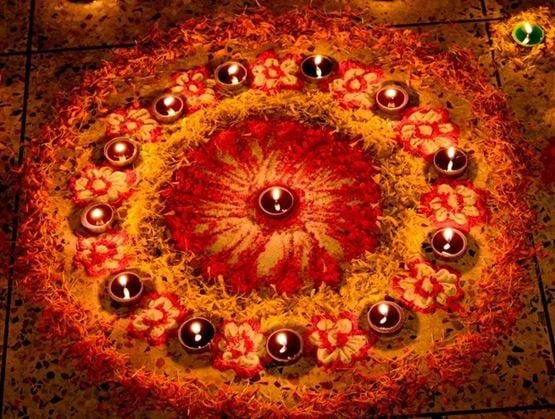
Across India, homes are decorated with oil lamps known as diyas, colourful rangoli patterns and flowers. Families offer prayers, exchange gifts and gather for festive meals. Food becomes both an offering and an expression of generosity, with recipes handed down through generations.
Mithai: The irresistible sweets of Diwali
Few foods are more closely associated with Diwali than mithai, the collective name for India's traditional sweets. Sweet shops fill their displays with colourful assortments, while households prepare favourite recipes to offer guests and exchange as gifts.
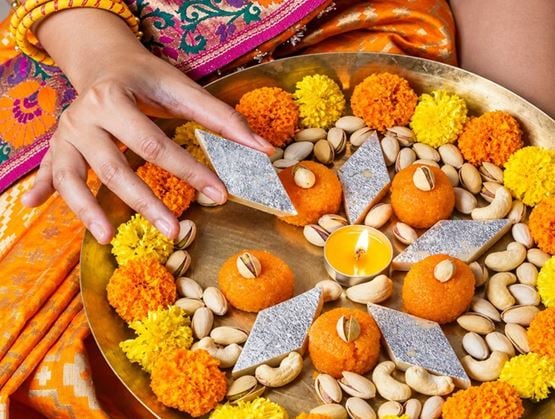
Among the most recognisable are laddoos, round sweets prepared from ingredients such as gram flour, semolina, sugar, ghee and nuts. Besan laddoo, made from roasted chickpea flour, has a rich, nutty flavour, while motichoor laddoo combines tiny fried droplets of gram-flour batter bound together with sugar syrup.
Another favourite is barfi, a dense confection traditionally prepared using milk solids, sugar and flavourings such as pistachio, coconut or cardamom. Kaju katli, a particularly popular festive delicacy, is made from finely ground cashews and sugar, often finished with a delicate layer of edible silver leaf.
Gulab jamun adds another indulgent dimension. These soft, golden balls, generally made with milk solids, are fried before being soaked in fragrant sugar syrup flavoured with cardamom or rosewater.
In northern India, gujiya is another festive speciality. These crescent-shaped pastries contain a sweet filling of milk solids, coconut, dried fruit or nuts and are fried until crisp.
Such confections mirror the importance of milk, ghee, nuts and aromatic spices in Indian festive cooking. They also demonstrate how a relatively small selection of ingredients can produce an extraordinary variety of textures and flavours.
Beyond sweets: The regional specialities of Diwali
Although sweets attract much of the attention, savoury foods are equally important to Diwali celebrations.
In Maharashtra, families traditionally prepare faral, an assortment of sweet and savoury snacks served throughout the festive period. Chakli, a crunchy spiral-shaped snack made from grain and pulse flours, is a particular favourite. Chivda, a mixture usually featuring flattened rice, nuts, spices and sometimes dried fruit, provides a lighter, crisp alternative.
Shankarpali, small diamond-shaped pieces of fried dough, can be sweet or savoury, while karanji resembles the northern Indian gujiya, commonly featuring a coconut-based filling.
Gujarat has its own festive repertoire, including mathiya, thin, crisp crackers traditionally made using moth bean flour and other flours, often served alongside sweet specialities such as mohanthal, a rich confection made with gram flour, ghee and sugar.
Further south, Diwali menus take on different characteristics. In Tamil Nadu, murukku, a crunchy, spiral-shaped snack made from rice flour and urad dal flour, is a familiar festive preparation. Adhirasam, made from rice flour and jaggery, offers a chewy, caramel-like sweetness, while Mysore pak, associated particularly with Karnataka, combines gram flour, sugar and generous quantities of ghee.
In West Bengal, where Kali Puja frequently coincides with Diwali, celebrations may include sweets such as sandesh, made from fresh curdled milk, and narkel naru, coconut balls sweetened with sugar or jaggery.
From family kitchens to a wider food market
Diwali's culinary traditions extend well beyond domestic kitchens. Sweet shops, confectionery manufacturers, snack producers and retailers all participate in the festive economy, supplying everything from freshly prepared mithai to packaged savoury assortments and decorative gift boxes.
The festival also highlights the diversity of India's food processing industry, where established recipes coexist with modern packaging, distribution and retail formats. Traditional products increasingly reach consumers through supermarkets, specialist shops and online platforms, alongside the independent sweet makers that remain central to festive food culture.
For manufacturers, Diwali illustrates the continuing commercial relevance of regional foods, particularly products closely associated with gifting, family occasions and cultural identity. It also creates opportunities to introduce Indian specialities to international consumers, including communities celebrating the festival far from India.
This relationship between culinary heritage and international business is reflected in SIAL India, an international food exhibition connecting Indian and overseas producers with buyers, distributors and food industry professionals. Its activities encompass confectionery, snacks, dairy products, ingredients, packaged foods and many other categories.
As part of the SIAL Network, the event contributes to the international visibility of India's food industry and its diverse regional specialities.
From handmade laddoos shared between neighbours to traditional snacks reaching shelves around the world, Diwali continues to demonstrate how food can preserve cultural identity while finding new audiences. Its recipes carry centuries of tradition, but their appeal extends far beyond the festival itself.