
PRIVATE LABELS COME OF AGE

For decades, private label had an easily recognisable place on the supermarket shelf. Its promise was straightforward: familiar products, restrained presentation and a lower price than the branded alternative. Today, that dividing line is becoming considerably less distinct.
From President’s Choice in Canada to Lotus’s own brands in Malaysia and the expanding portfolios of Indian retailers, store brands increasingly occupy value, mainstream and premium positions simultaneously. Retailers are developing propositions around health, convenience, provenance and sustainability, while investing in packaging and product innovation that makes their ranges recognisable in their own right.
The numbers reflect that transition. In August 2026, NIQ reported that 58% of consumers globally no longer particularly cared whether a product was a national brand or private label, while 68% considered private-label products a good alternative to national brands.
For food manufacturers, the shift opens a sizeable market. It also changes the job. Supplying private label products increasingly means contributing to the development of somebody else’s brand.
Europe turns private label into a destination
Europe remains the natural benchmark for private-label maturity. Across 17 European markets tracked by NielsenIQ, retailer brands reached a 39.5% value share in 2026. Eight markets were already above 40%, while private labels accounted for a combined 41.1% in Germany, the UK and France.
Yet price no longer explains the phenomenon on its own. Emily Mayer, Business Insights Director at Circana France, describes private labels as a structural change rather than simply a response to the inflationary period of 2022 and 2023. Consumers discovered that paying less did not necessarily mean sacrificing quality, and many continued buying retailer brands as inflationary pressure eased. Her succinct assessment is that “inflation opened the door; satisfaction has kept it open”.
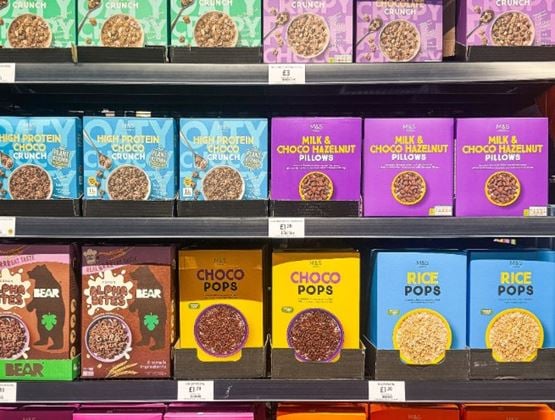
That confidence has encouraged retailers to broaden their ambitions. Premium tiers, organic lines, healthier formulations and convenience-led products allow the retailer to create differentiation that extends beyond price. Mayer argues that the next challenge is to create genuine preference, with innovation and stronger identities required if private labels are to continue gaining ground.
The consequences extend directly into manufacturing. A supplier competing for a private-label contract may now need R&D capabilities, rapid reformulation, packaging expertise, traceability systems and knowledge of emerging consumer expectations alongside competitive production costs. In many food industry sectors, manufacturing capacity is becoming the starting requirement rather than the defining advantage.
Canada shows how a store brand becomes a household name
Canada illustrates the branding potential particularly clearly. NIQ found in 2025 that 42% of Canadians were buying more private-label products than previously. Some 72% viewed them as good value and 68% considered them credible alternatives to national brands.
Loblaw’s President’s Choice is perhaps the best-known Canadian example of an own brand that has moved well beyond anonymous store-brand territory. Alongside the value-focused no name brand, it enables the retailer to address different consumer expectations under distinct identities rather than treating private labels as a single tier.
That portfolio approach matters to manufacturers. The question is no longer only whether a producer can make biscuits, sauces or frozen foods at the required cost. The product must fit a particular position within the retailer’s architecture. A premium line may call for distinctive ingredients or recipes, while a value range may depend on exceptional procurement and manufacturing efficiency.
Canadian shoppers are also becoming more selective. NIQ reported in its outlook for 2026 that 28% were choosing private-label alternatives as a money-saving strategy, alongside other behaviours such as switching to brands on promotion and visiting discount retailers. Retailers therefore need products that communicate value convincingly, rather than relying on a generic low-price message.
Asia develops its own private-label models
Across Asia, private labels start from a less mature and considerably more fragmented base. That makes the region particularly interesting for suppliers because retailers have greater room to define what their own brands should represent.
Malaysia shows how localisation and certification can form part of that identity. Lotus’s Malaysia says its portfolio now contains more than 830 own-brand products, combining locally manufactured and imported goods across categories including dairy, frozen food, confectionery, beverages and cooking ingredients. Its own-brand food products are halal-certified by JAKIM or recognised certification bodies.
For prospective suppliers, that creates a sourcing equation in which certification, food safety and understanding of local requirements sit alongside quality and price.
Indonesia presents another model. Indomaret sells private-label food, beverages and household products while also developing exclusive food concepts such as Point Coffee, Say Bread and Yummy Choice. With a network of more than 24,000 stores, its scale gives manufacturers access to an extensive convenience-led route to consumers.
India adds premiumisation to the picture. NIQ found that 67% of surveyed Indian shoppers preferred premium store brands, with interest extending into food categories including staples, chocolate and carbonated soft drinks. Reliance Retail, India’s largest grocery retailer, operates own brands including Good Life, Best Farms and Snactac. Its 2025-26 results specifically identified private-label contribution as one of the factors supporting retail performance.
These markets are not simply following Europe at a distance. Their own-brand strategies are being shaped by local retail formats, dietary requirements, price structures and consumer expectations.
From contract manufacturing to product partnership
For manufacturers, stronger retailer brands create an unusual combination of opportunity and pressure. Private labels can provide significant volume, access to new markets and a route onto shelves without the marketing investment required to establish a consumer brand independently. At the same time, retailers can demand increasingly sophisticated products while retaining ownership of the consumer relationship.
The competitive advantage therefore shifts towards manufacturers capable of contributing knowledge as well as production. Proprietary recipes, specialist processing, responsible sourcing, flexible batch sizes and rapid innovation can all strengthen a supplier’s position. The manufacturer may be invisible on the pack, but its capabilities can be central to why the product succeeds.
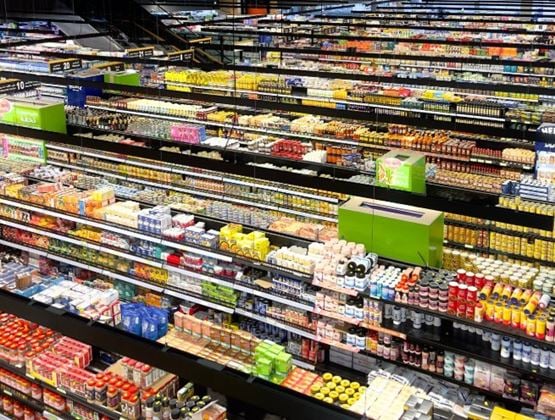
That makes private labels increasingly relevant within the food innovation exhibition environment. As retailers search internationally for manufacturers able to turn market insight into distinctive products, meetings between buyers and suppliers become part of the brand-building process itself.
Across the SIAL Network, that relationship connects markets at very different stages of private-label development, from highly mature European retail to rapidly evolving Asian systems. The name on the packaging may belong to the retailer. Increasingly, however, the strength of that name depends on the manufacturer behind it.
Image credits: Swarup Sarkar - Pexels, Ben Prater - Pexels