
FROM QUANTITY TO QUALITY: CHINA’S RISING PREMIUM MEAT MARKET

China’s meat sector has undergone a profound transformation over the past decade, shifting from a largely domestic supply model to a globally integrated market driven by scale, consumer demand and evolving dietary habits. Today, it stands not only as the world’s largest meat consumer but also as a key driver of international trade dynamics, influencing production strategies from South America to Europe.
Recent data from the United States Department of Agriculture indicates that China accounted for over 30 percent of global meat consumption in 2024, with pork remaining dominant but beef and poultry experiencing steady growth. According to the same source, China’s total meat consumption exceeded 95 million tonnes in 2024, underlining the sheer scale of its domestic market. This expansion stems from structural changes in urbanisation, rising incomes and a diversification of diets, particularly among younger consumers seeking higher-value protein sources.
A market shaped by demand and diversification
Pork continues to anchor China’s meat consumption, representing more than half of total intake. However, the market has diversified significantly in recent years. Beef consumption has grown consistently, supported by rising middle-class demand for premium cuts and Western-style dining experiences. According to OECD-FAO Agricultural Outlook projections, China’s beef consumption is expected to increase by around 8 percent between 2023 and 2030, reinforcing its role as a major importer.
This shift has had direct implications for global trade. China is now one of the largest importers of beef, sourcing from countries such as Brazil, Argentina and Australia. In 2024, Chinese beef imports exceeded 3 million tonnes, according to China Customs data, reflecting both domestic supply constraints and sustained consumer demand. This represents nearly 40 percent of global beef imports, positioning China as the single most influential buyer in the international beef market.

At the same time, poultry has gained traction as a more affordable and versatile protein. Its growth has been particularly notable in urban foodservice channels and ready-to-eat formats, aligning with broader convenience trends seen across the global food sector.
The result is a market that is no longer defined by a single dominant protein but by a layered structure, where price, origin, quality and format all play a role in shaping consumer choices.
Premiumisation and the rise of imported beef
One of the most striking developments in China’s meat sector is the rapid premiumisation of beef consumption. Imported beef has become synonymous with quality, traceability and safety, attributes that resonate strongly with Chinese consumers following past food safety concerns.
High-end cuts such as ribeye and sirloin are increasingly featured in restaurants, while e-commerce platforms have made premium meat products accessible to a wider audience. China’s online fresh food market surpassed RMB 560 billion (€72 billion) in 2024, with premium meat among the fastest-growing categories.
Demand for high-grade beef has also translated into strong growth for Wagyu and Wagyu-style products. Japanese Wagyu exports reached record global values of over ¥90 billion (€550 million) in 2024, with China and Hong Kong among the primary destinations. In parallel, Australian Wagyu exports to Greater China increased by more than 20 percent year-on-year in 2023, reflecting sustained demand for highly marbled beef cuts.
This trend has also created opportunities for international producers to differentiate their offerings through branding, origin labelling and certifications. Grain-fed versus grass-fed distinctions, marbling scores and breed information are now part of the purchasing decision, reflecting a more informed and quality-driven consumer base.
Consumer research reinforces this shift. A 2024 Deloitte China survey found that over 60 percent of urban middle-class consumers are willing to pay a premium for imported or high-quality beef, particularly for dining occasions and gifting.
In this context, steak has emerged as a symbol of this premium shift, bridging retail and foodservice channels while reinforcing the importance of product presentation and sensory experience.
SIAL Shanghai and the global meat showcase
Within this dynamic environment, food industry trade show platforms play a crucial role in connecting producers, importers and buyers. SIAL Shanghai has established itself as a central hub for the meat sector, bringing together stakeholders from across the value chain.
The event provides visibility for a wide range of exhibitors, from large-scale exporters to specialised fresh meat exhibitor brands seeking to position themselves in the Chinese market. It also reflects the diversity of the sector, encompassing beef, pork, poultry and processed meat products, alongside innovations in packaging, cold chain logistics and traceability systems.
SIAL Shanghai’s scale mirrors the importance of China within the global meat trade. With more than 180,000 trade visitors attending the event, it offers a platform not only for transactions but also for knowledge exchange, market insights and trend identification.
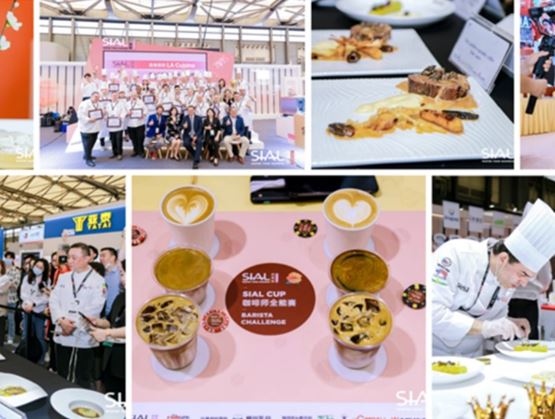
The presence of international delegations underscores how China has become a strategic priority for exporters worldwide, while domestic players use the event to benchmark against global standards and explore new partnerships.
Spotlight on excellence: the SIAL Best Steak Awards
Against this backdrop, the introduction of the SIAL Best Steak Awards adds a new dimension to the event’s meat offering. Designed as a global competition, the initiative brings together producers, importers and traders to showcase their best steak products in a structured and highly visible format.
The competition is open to all exhibitors at SIAL Shanghai and is free of charge, encouraging broad participation across the sector. Entries are evaluated by a panel of industry professionals, including experts from catering, supply chain and meat associations, who assess products based on appearance, aroma, colour, marbling, flavour and overall quality in both raw and cooked forms.
Winning products benefit from significant exposure, both during the event and through SIAL’s wider communication channels. For producers, this visibility can translate into new commercial opportunities and enhanced brand recognition in a competitive market.
More broadly, the SIAL Best Steak Awards illustrate how industry events are evolving beyond traditional exhibition formats to include curated experiences and competitions that highlight excellence and innovation.
A global sector anchored in China’s momentum
China’s meat sector continues to exert a strong influence on global supply chains, shaping production, pricing and trade flows across continents. Its scale, combined with its evolving consumer preferences, ensures that it remains a focal point for industry stakeholders.
At the same time, the sector’s transformation highlights broader shifts within food industry sectors, where quality, traceability and international collaboration are becoming central themes. Platforms such as SIAL Shanghai provide a space where these dynamics converge, allowing participants to navigate a market that is both complex and opportunity-rich.
As the industry looks ahead, the integration of competitions like the SIAL Best Steak Awards into major events reinforces the importance of excellence and differentiation in a crowded marketplace. It also signals a move towards more experiential and value-driven formats within the food innovation exhibition landscape.
These developments resonate beyond China, feeding into global conversations that continue to unfold at other SIAL Network gatherings, where the future of meat and the wider food sector is explored through innovation, dialogue and international exchange.