
THE END OF GLOBAL ONE-SIZE-FITS-ALL FOOD TRENDS

For decades, globalization fostered the idea of universal food trends. From fast food chains to international product launches, the industry often moved in synchronised cycles, with similar concepts replicated across continents. Today, that model is being challenged. Rather than converging, food cultures are fragmenting, reflecting local tastes, economic conditions and cultural identities.
This shift does not signal a retreat from globalisation but a reconfiguration of it. Connectivity remains strong, yet its effects are increasingly localised. Trends now circulate globally but adapt rapidly to regional contexts, resulting in a more complex and differentiated food landscape.
The rise of regional specificity
One of the most striking developments is the growing divergence between markets. Consumer expectations are no longer aligned around a single global standard. Instead, regional preferences are asserting themselves more strongly, shaped by cultural heritage, climate, purchasing power and local supply chains.
Recent data reflects this shift, with more than 70% of global consumers stating that they prefer locally relevant flavours and products over standardised international offerings, according to a 2024 global consumer survey. At the same time, over half of food and beverage launches worldwide in 2025 were adapted for regional tastes, highlighting how localisation has become a core innovation strategy.
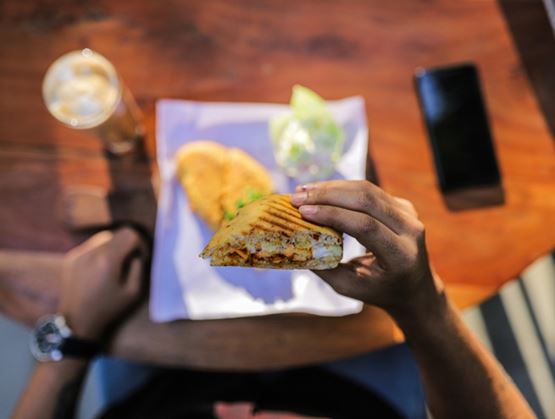
This shift is particularly visible in how global restaurant chains and food manufacturers adapt their offerings. Fast food brands, for example, routinely tailor menus to local tastes. In India, beef is largely absent and menus feature products such as paneer-based burgers or spiced potato patties.
In Japan, seasonal items such as teriyaki burgers or matcha desserts reflect local flavour preferences, while in the Middle East, menus often incorporate halal-certified ingredients and regionally inspired spices. Beverage companies follow similar strategies, developing flavours such as lychee, yuzu or tamarind for Asian markets, or reformulating products to meet local expectations around sugar content and health claims.
This localisation trend is also evident in product reformulation, with nearly 65% of multinational food companies reporting that they now develop region-specific recipes as a priority, rather than adapting global products post-launch.
In Asia, rapid urbanisation and digital adoption have accelerated demand for convenience and delivery-based formats, while maintaining strong ties to traditional flavours. In contrast, European markets are placing increasing emphasis on origin, traceability and artisanal production, favouring products with protected designations or local sourcing. In North America, innovation often centres on functionality and convenience, reflecting fast-paced lifestyles and a mature retail ecosystem.
Recent market analyses indicate that food consumption patterns are becoming more segmented, with regional growth trajectories diverging significantly. Emerging markets are driving volume growth, while mature economies focus on premiumisation and added value. This divergence reinforces the idea that there is no longer a single “global consumer”.
The same dynamic is visible in product development. Multinational brands are adapting recipes, formats and marketing strategies to local expectations rather than deploying standardised global products. This localisation is no longer optional but essential to remain competitive.
Hybrid cuisines and cultural crossovers
At the same time as regional identities strengthen, culinary boundaries are becoming more fluid. Hybrid cuisines are gaining prominence, blending techniques, ingredients and traditions from different cultures into new formats. This dynamic is underpinned by strong consumer interest, with around 76% of global consumers reporting that they enjoy trying foods from other cultures, while nearly 60% of Gen Z diners actively seek fusion or cross-cultural flavours when eating out. This appetite continues to grow, with nearly 48% of consumers globally stating they are more interested in trying unfamiliar cuisines than they were two years ago.
Indo-Chinese cuisine is a well-established example, combining Chinese cooking methods with Indian spices and flavours. Similar dynamics are now visible worldwide, from Korean-Mexican street food to Japanese-Peruvian Nikkei cuisine or Middle Eastern-European hybrids. This evolution is increasingly reflected on menus, where globally inspired or fusion dishes have grown by approximately 9% between 2023 and 2025, signalling a shift from niche experimentation to mainstream adoption. In parallel, close to 40% of new restaurant concepts globally now incorporate cross-cultural or fusion elements, highlighting how embedded this trend has become within foodservice.
These hybrid forms are not superficial combinations but often reflect deeper cultural exchanges. Diaspora communities play a key role, adapting traditional recipes to new environments and ingredients. Over time, these adaptations become distinct culinary identities in their own right.

Social media has accelerated this process. Platforms such as TikTok and Instagram enable rapid dissemination of recipes and formats, encouraging experimentation and cross-cultural inspiration. More than 65% of Gen Z consumers now discover new cuisines through digital platforms, reinforcing the speed at which hybrid food trends emerge and evolve. What might once have remained a local innovation can now gain international visibility within days, only to be reinterpreted again in different contexts.
From global trends to local reinterpretations
The fragmentation of trends is also evident in how global concepts are adopted. Rather than spreading uniformly, they are increasingly reinterpreted at a local level.
Plant-based products provide a clear example. While the global narrative focuses on sustainability and health, regional implementations vary widely. In Europe, plant-based innovation often emphasises organic ingredients and clean labels. In Asia, it may focus on traditional plant proteins such as tofu or tempeh. In North America, product development frequently centres on technological replication of meat textures.
Similarly, convenience food takes different forms depending on local habits. Ready-to-eat meals in Japan differ significantly from those in Europe or Latin America, both in composition and presentation. This localisation reflects not only taste preferences but also cultural attitudes towards eating, time and social interaction.
This pattern suggests that global trends now function more as frameworks than fixed models. They provide inspiration rather than prescription, leaving room for regional adaptation and innovation.
Identity, authenticity and consumer expectations
Underlying these changes is a shift in consumer mindset. Food is increasingly linked to identity, whether cultural, personal or social. Consumers are seeking products that resonate with their values, experiences and sense of belonging.
Authenticity has become a key driver. However, authenticity is no longer defined solely by tradition. It can also emerge from hybridisation, where new combinations reflect contemporary realities. A fusion dish can be perceived as authentic if it aligns with the lived experience of a community.
At the same time, there is growing interest in discovering other cultures through food. Hybrid cuisines respond to this curiosity by offering accessible entry points into unfamiliar flavours. They balance novelty with familiarity, making them particularly appealing in diverse urban environments.
A more complex global food landscape
The decline of uniform global trends does not imply a lack of direction. Instead, it points to a more layered and dynamic system, where multiple trends coexist and evolve simultaneously.
For industry players, this complexity requires new approaches. Market analysis must move beyond broad global categories to capture regional nuances. Product development needs to integrate flexibility, allowing for adaptation across different markets. Branding strategies must balance global coherence with local relevance.
This evolving landscape is increasingly reflected in international gatherings. At SIAL Network events in India, Canada, China, Malaysia, Indonesia, Vietnam and France, the diversity of products and concepts highlights how regional identities and hybrid innovations are shaping the future of food. As leading food innovation shows, they bring together stakeholders from across the food industry sectors, offering a snapshot of a world where trends are no longer uniform but richly diverse.
In this context, the future of food appears less about convergence and more about coexistence. Regional specificity and cultural hybridisation are not opposing forces but complementary dynamics, driving a new phase of global food innovation.
Images credits: Outcast India, Jay Gajjar, Pablo Mercha Montes, from Unsplash