
CHINAMAXXING: WHEN CHINESE FOOD CULTURE GOES GLOBAL

A mug of hot water, a bowl of congee, perhaps even a boiled apple. None of these is new or remarkable in a Chinese household. Yet on Western TikTok feeds in 2026, such habits have acquired a new label: “Chinamaxxing”.
The term combines China with the internet suffix “maxxing”, which refers to maximising a particular trait or lifestyle. It has been used by predominantly younger Western creators adopting practices they associate with Chinese daily life, from house slippers and baduanjin exercises to mahjong, hot water and Chinese breakfasts. Channel NewsAsia reported that the phrase took off particularly among Gen Z users early in 2026, while also attracting criticism when a complex culture is reduced to online signifiers.
Food gives the trend more substance. It is where curiosity can become repeated behaviour: a breakfast cooked at home, a chilli condiment bought at the supermarket, a hotpot restaurant visited with friends, or a tea order that enters someone’s weekly routine.
Soft power, served at the table
The shift from online curiosity to everyday behaviour is what makes Chinamaxxing more than a passing social media label. It also connects with a much broader idea: soft power.
Coined by political scientist Joseph Nye, soft power describes a country’s ability to build influence through attraction rather than coercion or economic pressure. Culture, education, entertainment, tourism and lifestyle can all contribute by shaping how a country is perceived abroad. Food is one of its most immediate forms. Cuisine crosses borders easily, requires no shared language and can introduce people to a culture through something as familiar as a meal.
For China, that influence is increasingly visible beyond the longstanding global presence of Chinese restaurants. Social media is exposing international audiences to a much wider range of regional dishes, dining rituals and everyday habits, from Sichuan mala flavours and Yunnan noodles to hotpot, tea culture and traditional breakfasts. Instead of encountering Chinese food only through adapted overseas menus, younger consumers can now watch dishes being cooked in Chengdu, Guangzhou or Shanghai and seek out similar flavours locally.
This greater visibility has also been accelerated by more direct contact between Chinese and international social-media users. In January 2025, more than 700,000 Americans joined Xiaohongshu, or RedNote, amid uncertainty surrounding TikTok in the US, creating an unusual wave of cross-border exchanges focused on food, pets, routines and everyday life.
Food is particularly well suited to this kind of cultural transmission. A regional dish can become familiar internationally before a restaurant group enters a new market, while a breakfast habit or condiment can move from video content to supermarket basket with surprising speed. Chinese culinary soft power is therefore being carried not only by restaurants and tourism, but increasingly by creators, algorithms and millions of small acts of curiosity.
From hotpot to new-style tea
The international growth of Chinese food and beverage brands gives that digital fascination a bricks-and-mortar counterpart. Haidilao’s overseas operator, Super Hi International, reported 126 restaurants across 14 countries at the end of 2025. Revenue rose 8% that year to $840.8 million. Hotpot is particularly exportable because the dining experience is inherently participatory, built around shared cooking, customisable sauces and a long, social meal that also translates well to video.
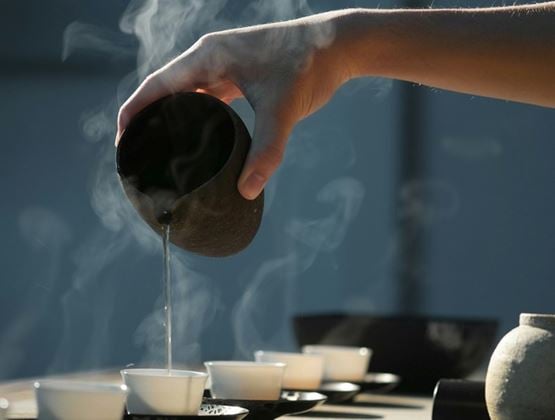
Tea is following a similar route. Chagee, known for its freshly brewed tea and premium milk tea offerings, operated more than 6,000 teahouses by 2024 and has expanded into markets including Malaysia, Singapore and Thailand. Luckin Coffee opened its first two US stores in New York in 2025 after growing to more than 24,000 stores globally, taking a Chinese model of app-led ordering and flavour experimentation into the world’s largest coffee market.
These businesses export more than flavours. They carry formats refined in an intensely competitive domestic market: rapid product launches, visually distinctive drinks, digital ordering and menus built for novelty. China is becoming a more visible source of foodservice concepts as well as cuisine.
The feed is becoming a menu
Social media has widened the vocabulary of Chinese food abroad. Sichuan and Chongqing-style mala flavours, hand-pulled noodles, regional barbecue, and tanghulu, can circulate as separate identities rather than being compressed into a generic idea of Chinese cuisine.
The risk is simplification. Chinamaxxing can turn cultural habits into an aesthetic checklist, while virality can flatten regional differences. Yet curiosity creates commercial consequences when viewers move from watching to tasting. China recorded more than 150 million inbound visits in 2025, up over 17% year on year, while official figures noted hotpot among popular experiences for international visitors.
China’s catering revenue rose 3.2% in 2025, reflecting the scale of a domestic market in which formats and flavours are continuously tested. For international operators, the question is increasingly which part of China’s fast-moving food culture will travel next.
Where cultural curiosity meets the trade floor
That question is visible at SIAL in China. SIAL Shanghai 2026 drew 183,302 industry professionals from 132 countries and regions in May, with organisers reporting more than $14 billion in intended onsite transactions. The next food industry trade show in the country is SIAL Guangzhou, running from 3 to 5 September 2026 at the Poly World Trade Center Expo.
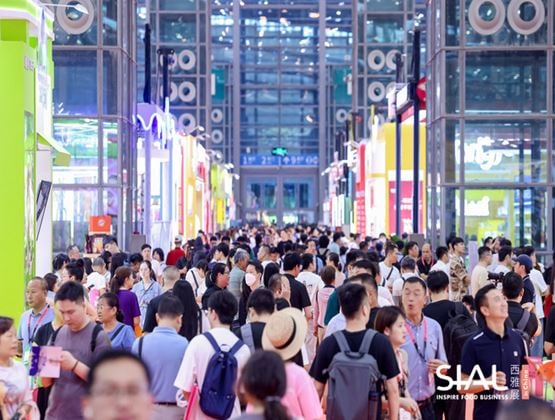
Together, the two exhibitions and other SIAL Network events offer a commercial view of the forces playing out online: Chinese tastes becoming more legible internationally, domestic concepts looking outward and global companies watching China for the next format with export potential. They also provide the meeting point where a viral flavour, beverage ritual or regional speciality can be evaluated as a genuine business opportunity. Chinamaxxing may eventually lose its hashtag momentum. The appetite behind it looks more durable.
Image credits:
五玄土 ORIENTO - Unsplash