
WHEN PACKAGING BECOMES MEDIA

The shelf has become one of the most crowded media spaces in the food sector. Packaging is no longer asked simply to protect a product and carry mandatory information. It must catch the eye, explain what a brand stands for, reassure a cautious shopper and make a sale, often within seconds.
A supermarket aisle has always been visual, but its role is changing. Cartons, jars, bottles and pouches now compete not only with neighbouring products, but with social feeds, delivery apps, retail media screens and the information shoppers carry in their phones. The shelf itself is becoming a communication channel, and the packaging its most permanent piece of content.
This shift is happening as marketing investment moves closer to the point of purchase. European retail media spending reached €13.3 billion in 2025, up 16.7% year on year, outpacing the wider digital advertising market. That figure largely covers digital retail media, but the logic extends into physical stores. Brands want communication to appear where purchase intent is highest. On the shelf, packaging already owns that position.
The package as a miniature brand world
For decades, front-of-pack design revolved around recognition: a logo, a colour, an appetite cue and a clear product name. Those fundamentals remain, but packaging is being asked to carry more meaning. Provenance, founder stories, farmer relationships, preparation ideas, environmental commitments and brand personality have moved from websites and campaigns onto cartons and wrappers.
What shoppers look for as innovation on supermarket shelves is becoming broader than novelty alone. Health and functional benefits, convenience, sustainability and transparency are increasingly part of the equation. NielsenIQ found that 53% of consumers across 19 countries planned to buy more high-fibre foods, while around 40% expected to buy more superfoods, high-protein plant-based foods or probiotics. At the same time, 82% said health and wellness labels should be more transparent and easier to understand. Innovation therefore needs not only to offer something new, but to make its benefit immediately clear.
What that looks like on a supermarket shelf, however, changes from country to country. Retailers adapt assortments to local tastes, eating habits, purchasing power and shopping occasions, sometimes down to individual regions. SIAL Network identifies similar contrasts across food markets: smaller packages, affordability and regional flavours matter in India; premium positioning, traceability and digitally enabled packaging are increasingly important in China; halal certification, functional products and convenience influence parts of Southeast Asia; while sustainability, local sourcing and recyclable packaging have particular resonance in Canada.
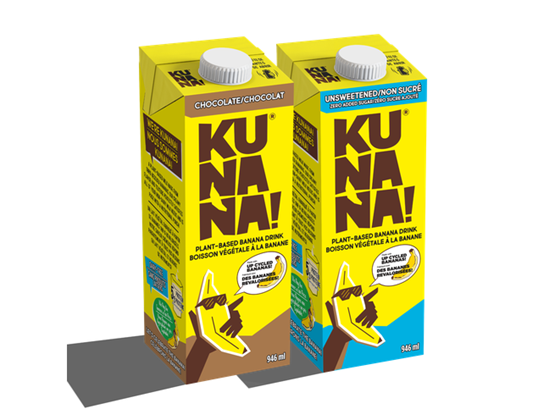
The SIAL Network’s World Champions Tour offers a useful snapshot of that diversity. Among the 2026 winners, Kunana’s Banana Milk, Gold winner at SIAL Canada 2026, transforms upcycled whole bananas into a plant-based drink with natural potassium and protein. At SIAL in China Shanghai 2026, TRUE ACAI won Gold with a caffeine-free roasted açaí seed coffee alternative rich in antioxidants and fibre, while Leci High-Calcium Steamed Chickpeas took Bronze with nutrient-enriched chickpeas in a portable pouch. Together, these products show how supermarket innovation can take different forms across international markets, from upcycling and plant-based alternatives to functional nutrition and on-the-go formats. Packaging then becomes the crucial first layer of communication, helping shoppers quickly understand what is new, why it matters and how the product fits their needs.
That storytelling has value because packaged food is often bought repeatedly. An advertising campaign may be fleeting, while a cereal box, coffee bag or sauce bottle can remain in a kitchen for days or weeks. Packaging travels from shelf to trolley, from cupboard to table, creating repeated opportunities for the brand voice to be seen.
Yet storytelling only works if hierarchy remains clear. In a busy aisle, product type, flavour, format and key benefit still need to be understood quickly. The strongest packages operate in layers, selling from a distance and explaining more at closer range.
Reassurance becomes part of the creative brief
The second role is less theatrical but increasingly important: reassurance. Food shoppers are examining products more closely, particularly around ingredients, health, origin and environmental claims. NIQ research published in 2025 found that 71% of consumers scrutinise ingredients, origins and nutritional benefits before purchasing. Separate NIQ research reported that 62% of consumers do not trust health claims made by food companies, while 45% want packaging to be more transparent and easier to understand.
Regulation is reinforcing the same direction. The EU Packaging and Packaging Waste Regulation entered into force in February 2025 and began applying generally from 12 August 2026, bringing new requirements around recyclability, waste reduction and labelling. For food manufacturers, compliance and communication are becoming increasingly intertwined.
Trust, then, is not built by adding the largest possible number of badges. It is built by deciding which information matters most, showing it clearly and avoiding the clutter that can make reassurance look like over-selling.
From printed surface to connected media
The most significant change may be that packaging is no longer limited by its physical dimensions. QR codes and GS1 Digital Link are turning packs into gateways to information that can change without redesigning the label.
In April 2026, Tesco became the first UK supermarket to move an entire product range exclusively to QR codes powered by GS1, beginning with 13 own-label sausage lines. The codes can connect shoppers to nutritional information, traceability, recipes and other digital content while supporting retail functions such as stock management and targeted recalls.
A small package can therefore acquire a second, expandable screen. A provenance statement can lead to a farm story. A sustainability claim can open onto evidence. A recipe can turn a single product into a meal idea. Information can also be updated by batch, market or season, allowing packaging to behave more like live media than static print.
That possibility matters in a food industry trade show environment too. Buyers encounter hundreds of products in compressed periods of time, and packaging often carries the first pitch before a conversation begins. At SIAL Paris and across the SIAL Network, the packs that stand out increasingly do more than look distinctive. They communicate a proposition, provide proof and invite deeper engagement. As shelves become media, packaging is moving closer to the role of a brand’s smallest showroom, one that travels wherever the product does.
Image credits:
Tetiana Bykovets - Unsplash
Dušan Cvetanović - Pexels