
MALAYSIA’S ASEAN FOOD GATEWAY

A regional trade exhibition earns its relevance not simply from the number of people passing through its doors, but from what happens once they are inside. In Kuala Lumpur this July, that meant buyers comparing suppliers from several countries in a single morning, manufacturers testing routes into new markets and emerging food businesses presenting ideas directly to commercial partners.
Held from 21 to 23 July, Food & Drinks Malaysia by SIAL 2026 welcomed 18,063 attendees, more than 441 exhibitors, 19 local and international pavilions and over 1,000 brands. The international business-to-business food and beverage exhibition occupied four halls at the Malaysia International Trade and Exhibition Centre, a major exhibition and convention venue in Kuala Lumpur. Professionals from 93 countries and regions attended, while 89% of visitors and 95% of exhibitors reported achieving their objectives.
Those numbers give the exhibition scale. Malaysia’s position within Southeast Asia gives it context.
Malaysia’s ASEAN advantage moves onto the show floor
Malaysia combines a substantial domestic market with close commercial links across the Association of Southeast Asian Nations, the ten-country regional grouping better known as ASEAN. Malaysia’s total trade increased by 6.3% in 2025, while exports to ASEAN reached a record level, reinforcing the country’s role in regional supply chains.
Food provides another dimension. Malaysia imported $10.8 billion of consumer-oriented agricultural products in 2024, while its food processing industry accounts for around 7% of manufacturing. Smaller retail formats, convenience foods, health and wellness products and sustainable packaging are among the trends identified in the market. USDA’s latest exporter guide for Malaysia also points to an extensive foodservice sector supported by tourism and a well-established food processing base.
Halal gives Malaysia particular international weight. Halal exports grew by 10.9% in 2025, with food and beverages accounting for 53.8% of the total. For companies supplying halal products, ingredients or manufacturing solutions, Kuala Lumpur can therefore offer both a sophisticated domestic ecosystem and connections to Muslim consumer markets beyond Malaysia.
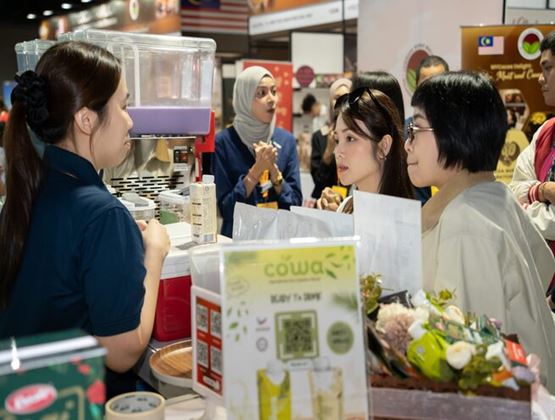
That combination was visible at Food & Drinks Malaysia by SIAL 2026. Participants came from China, France, India, Indonesia, Italy, Japan, South Korea, Thailand, Türkiye, the United Arab Emirates and the United States, among other markets.
Brazilian meat producer Mercúrio Alimentos offered a practical example of the exhibition’s gateway function. After receiving approval to export beef to Malaysia, the company used the event to introduce its products, increase visibility and meet potential commercial partners as it developed the market.
Buyers turn regional reach into business
International participation only becomes commercially meaningful when it connects supply with purchasing power. The exhibition’s hosted buyer programme was designed to do precisely that by bringing selected professional purchasers into scheduled meetings with relevant exhibitors.
In 2026, the programme gathered 161 local and international buyers from 12 countries and regions and facilitated 1,914 buyer-seller meetings. The estimated sales value associated with the programme reached $283,039,600.
Retailers, distributors, wholesalers and trading companies made up 64% of participating buyers. Hotels, restaurants, cafés and other foodservice operators represented another 17%, illustrating the variety of routes through which products discovered at the exhibition can reach consumers.
The regional dimension was particularly strong. More than six in ten international hosted buyer companies came from ASEAN, with Singapore, Indonesia and Vietnam prominent alongside participants from China, Taiwan, India, Bangladesh, Egypt, Mauritius and the United States.
What they were looking for also provides a useful reading of current sourcing priorities. Beverages and non-alcoholic drinks attracted the interest of 48% of visitors, followed by halal and lifestyle foods at 34% and meat, poultry and seafood at 27%. Food processing, packaging and technology reached 26%, as did dairy and plant-based alternatives. Grocery products, ingredients, functional nutrition and fresh produce were also widely sought.
Investment is supporting that industrial backdrop. Food manufacturing attracted significant approved investment in Malaysia during 2025, and in the first half of 2026 it was among the country’s five largest manufacturing industries for new approvals, with investment in the category rising 40.9% year on year. Malaysia’s investment authority reported the increase in August 2026.
Innovation broadens the route to market
Alongside sourcing, product development remained closely connected to the SIAL identity. SIAL Innovation is the Network’s international programme for identifying noteworthy new food and beverage products, giving innovation a commercial audience of buyers, distributors and other industry professionals.
At the Malaysian edition, 169 innovations from 77 companies across 12 countries were submitted, with ten finalists selected. They included Lime Peel Roll from Thailand’s Lemon Me Farm, ShroomKoko Cocoa Bev from Malaysian company Grusonn Wellness and Green Tea Seed Bibim from South Korea’s Dahaefood.
The food innovation exhibition also looked beyond packaged products to the businesses and technologies developing behind them.
ScaleX, Malaysia’s nationally aligned AgriFoodTech scale-up programme, brought 19 growth-stage companies into a pitching session where they presented innovations and business models to investors, corporations and industry stakeholders.
The SPARK Kuala Lumpur, a startup platform focused on food-system innovation, showcased seven young companies from Malaysia and Singapore working across food technology, biotechnology, artificial intelligence, sustainability and future-food concepts.
ChamberLink Exchange served another purpose. The business forum brought together more than ten chambers of commerce, associations and industry organisations to discuss international trade, market expansion and cross-border partnerships. Rather than another product showcase, it created space for the institutions that help companies understand and enter new markets.
A Malaysian platform within a global network
Food & Drinks Malaysia by SIAL 2026 also extended into the skills and experiences shaping demand. More than 800 contestants from 20 countries and regions competed in the Global Culinary Challenge Malaysia, while SIAL Culinary Masters Asia brought together 67 culinary talents. The ASEAN Barista Team Championship added 18 teams from seven countries and regions.
Dedicated experiences ranged from international wines, beers, spirits and sake to sommelier-led education and a chocolate and coffee gourmet area. Together, these formats connected products with the chefs, beverage professionals and hospitality operators who influence how new concepts reach consumers.
Kuala Lumpur is one part of a much larger international architecture. The SIAL Network encompasses 12 leading food and beverage events, around 17,000 exhibitors and 700,000 professional visitors, combining global connections with exhibitions rooted in individual markets.
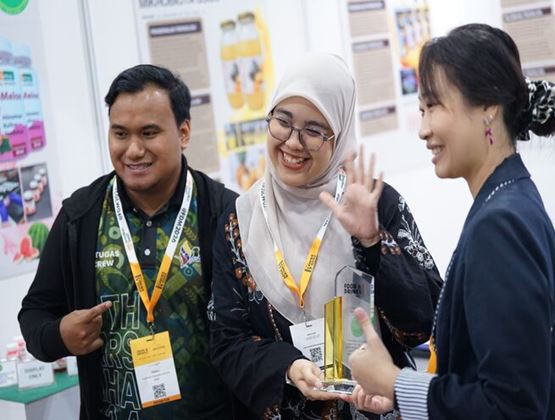
built around the particular opportunities of Malaysia and Southeast Asia. The next edition will take place from 20 to 22 July 2027 at the Malaysia International Trade and Exhibition Centre in Kuala Lumpur, carrying those regional connections into another year of sourcing, innovation and international food business.