
GLP-1S AND SMALLER APPETITES: HOW RESTAURANT MENUS ARE BEING REINVENTED

The most striking thing about the GLP-1 trend is not that people are eating less. It is that the food industry is having to rediscover how to make “less” feel generous.
For decades, much of modern hospitality was built around abundance: overflowing plates, large formats, bottomless refills, indulgent sharing dishes and the quiet assumption that appetite was a reliable constant. GLP-1 drugs, including Ozempic, Wegovy and Mounjaro, are disrupting that logic. They reduce appetite, slow gastric emptying and can make rich, fatty or oversized meals harder to tolerate. The result is not the end of eating out, but a more precise question for restaurants: how does a dining experience remain satisfying when the customer may only want half the food?
The figures explain why the food industry is paying attention. Grand View Research estimated the global GLP-1 receptor agonist market at $66.38 billion in 2025 and projected it to reach $82.01 billion in 2026, before climbing to $185.32 billion by 2033. Reuters has reported that analysts expect the global obesity drug market driven by GLP-1s to become a $150 billion-a-year category by the next decade, although more recent forecasts suggest 2030 expectations may be closer to $100 billion as supply, access and reimbursement questions come into sharper focus. For restaurants, retailers and food manufacturers, this is not just a pharmaceutical story. It is a consumption story, reshaping appetite, portion size, protein demand and the economics of everyday meals.
What a GLP-1 diet really means
A GLP-1-friendly diet is not a formal medical category, and the phrase itself remains loosely defined. “GLP-1 Friendly” labels are becoming more common in US supermarkets but are not regulated by the FDA, while dietitians warn that products carrying the label can still be high in fat, sodium or sugar.
The nutritional principles, however, are becoming consistent. Because many GLP-1 users eat less, the food they do eat needs to work harder. Protein supports muscle maintenance during weight loss. Fibre supports digestion and satiety. Hydration matters because some users experience reduced thirst signals. Heavy fried foods, very fatty dishes, sugary items, spicy foods and acidic foods can aggravate nausea, reflux or discomfort. Mayo Clinic guidance highlights practical strategies such as prioritising protein at each meal, choosing sources such as eggs, fish, poultry, dairy, legumes and soy, spreading protein through the day and considering smaller, more frequent meals when appetite is low.
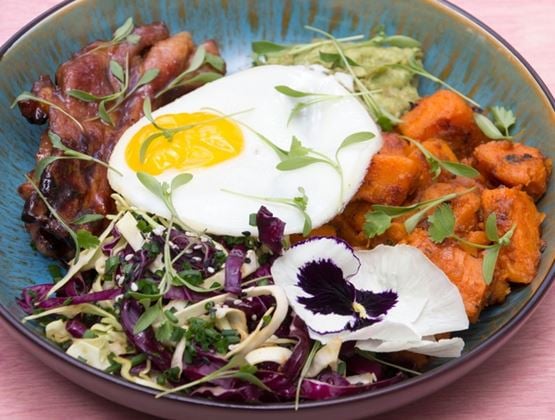
For restaurants, this translates into a new kind of menu architecture. The winning dishes are not necessarily diet dishes. They are composed of dishes: protein first, vegetables present, fibre visible, fat moderated and flavour still intact. The challenge is to avoid making reduced appetite feel like reduced pleasure.
From supersized to right-sized
In the United States, where the trend is most visible, this question is already shaping menus. A November 2025 KFF Health Tracking Poll found that 12% of US adults were currently taking a GLP-1 drug for weight loss, diabetes or another condition, while 18% had taken one at some point. A recent Vogue article framed 2026 as a potential year of the GLP-1 food menu, pointing to a wave of restaurant and chain activity built around smaller portions, higher protein and more visible nutrition cues.
The first wave of restaurant adaptation is not especially futuristic. It looks like chicken, fish, beans, vegetables, sauces on the side and portions that no longer assume a large appetite.
Cuba Libre Restaurant & Rum Bar, with locations including Washington, D.C. and Philadelphia, is one of the clearest examples. Its GLP-Wonderful Menu, launched in October 2025, features five smaller entrées built around high protein and fibre, including Ropa Vieja, Pollo Asado, Camarón Salteado and Salmón a la Plancha. The restaurant says the dishes are nutritionally balanced, come with full nutrition facts and are priced around 25% lower than comparable main-menu dishes.
Fast casual brands have moved even faster, partly because customisation is already built into their model. Chipotle introduced its first High Protein Menu in late 2025, including a High Protein-High Fibre Bowl with 46g of protein and 14g of fibre, a High Protein-Low Calorie Salad with 36g of protein and 10g of fibre, and a snack-sized High Protein Cup with 32g of protein. Shake Shack’s Good Fit Menu, launched online and in restaurants, explicitly includes high-protein, gluten-free, vegetarian and GLP-1-friendly choices, with some options reaching up to 52g of protein.
The commercial message is subtle but important. These menus are not only for people on medication. They are also for consumers who want control, clarity and smaller commitments. A single taco, a lettuce-wrapped burger or a protein cup may serve the GLP-1 user, the gym-focused customer, the older diner, the flexitarian and the lunchtime snacker at once.
Europe moves more slowly, but the UK is testing the model
Europe is not following the US at the same speed. GLP-1 uptake is around 12% in the US, compared with roughly 2% across the EU and UK. The same analysis noted stronger traction in Germany and cultural change in the UK, while France, Spain and Italy remain more sceptical. In France, 2% of people are using GLP-1s according to Mintel data, but only 7% of French consumers see them as a good tool for weight loss.
Even so, the direction of travel is visible. UK penetration rose from 6% in 2025 to 7% in early 2026, suggesting gradual growth rather than sudden disruption. In restaurants, London is becoming a useful test market. Otto’s, a high-end London restaurant known for generous dishes, introduced a small-appetite menu for diners who still want a luxury experience but cannot manage traditional portions. At Island by Tom Brown in King’s Cross, the menu is divided into small, large and tiny “islands”, a format not created solely for GLP-1 users but well matched to changing appetites.
That distinction matters. In Europe, where overt medicalised marketing can meet consumer scepticism, restaurants may be more likely to adapt quietly through smaller plates, flexible ordering, premium starters, protein-rich mains and lower-alcohol pairings, rather than branded “Ozempic menus”.
Asia-Pacific enters the conversation
Asia-Pacific is not yet seeing the same restaurant-level response as the United States, but the region is becoming increasingly important to the GLP-1 story. Consumer openness is already visible. NielsenIQ research found that 34% of APAC consumers said they were likely to use a medication or drug to support weight loss, pointing to a much broader wellness and weight-management audience than current prescription numbers alone might suggest .
The market is also expanding quickly. Grand View Research estimates that the Asia-Pacific GLP-1 agonists weight-loss drugs market generated around $1.12 billion in 2024, with annual growth of 16.1% forecast between 2025 and 2030. Japan has become one of the region’s most advanced regulated markets, with Wegovy marketed there since February 2024, while South Korea is emerging as a fast-moving adoption market. Local reporting cited combined prescriptions for Wegovy and Mounjaro reaching 168,677 in November 2025, around 2.5 times higher in four months.
China and India could reshape the next phase. China combines large diabetes and obesity-related demand with an active domestic pharmaceutical pipeline, while India may become a key market for lower-cost access as generic competition develops. For foodservice, the impact is still more prospective than visible. Yet the direction is familiar: smaller portions, protein-rich meals, fibre-forward products, blood sugar management, gut health, functional snacks and low/no-alcohol options. Asia may not yet have a wave of GLP-1 menus, but its food and retail sectors are already operating in the same wider space: appetite control, metabolic health and more intentional consumption.
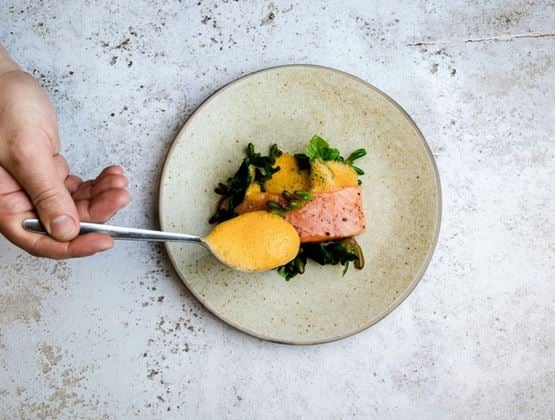
Groceries show where restaurants may go next
Retail is moving faster than hospitality and leading to commercial response to GLP-use, especially in North America, where adoption is highest and grocery data is already showing behavioural change. The shift is already visible in frozen meals, smoothies, protein-forward snacks and digital grocery merchandising. The opportunity is less about creating a narrow “diet” category than about reorganising familiar retail cues around the needs behind the medication: smaller portions, high protein, fibre, digestive comfort, hydration, convenience and nutrient density.
For every grocery products exhibitor, every restaurant group and every food innovation show, the signal is broader than GLP-1 alone. It points to a consumer who wants smaller formats without feeling penalised, protein without bodybuilder branding, indulgence without excess and health cues without stigma.
Across the SIAL Network, which includes events in Canada, France, India, China and Southeast Asia, this creates a valuable lens for the next generation of food innovation. For now GLP-1s use may be more predominant in the United States, but their influence is already spilling into portion design, ready meals, foodservice strategy, snacking, fresh foods and functional positioning. For restaurants and the wider food industry, the future plate may be smaller, but the opportunity around it is anything but.
Image credits:
Hush Naidoo Jade Photography - Unsplash
Edward Howell - Unsplash