
INDIA IN FOCUS AS SIAL EXPANDS ITS GLOBAL NETWORK

Global food trade may move across borders with increasing speed, but the routes to market remain deeply shaped by local conditions. A product that finds buyers in Paris may require an entirely different distribution strategy in Mumbai, Kuala Lumpur or Jakarta. Consumer expectations, regulations, retail structures and even the meaning of innovation change from one market to another.
This balance between international scale and local knowledge is becoming central to the development of the SIAL Network. Its international footprint connects food businesses through events across Europe, North America and Asia, while its Asian portfolio reflects the specific dynamics and opportunities of each individual market.
India’s role in 2026 provides perhaps one of the clearest expressions of that strategy. SIAL India Mumbai brought the international industry into the heart of the Indian market in April. Six months later, India arrived at SIAL Paris as Country of Honour, taking its own food industry, ingredients, brands and ambitions onto one of the sector’s largest international stages.
A network becoming more local as it becomes more global
The expansion of SIAL across Asia reflects the growing commercial importance of the region, but also its complexity. Urbanisation, changing lifestyles, developing distribution networks and shifting consumer expectations are creating opportunities across Southeast Asia and India. Yet the similarities can obscure major differences between countries.
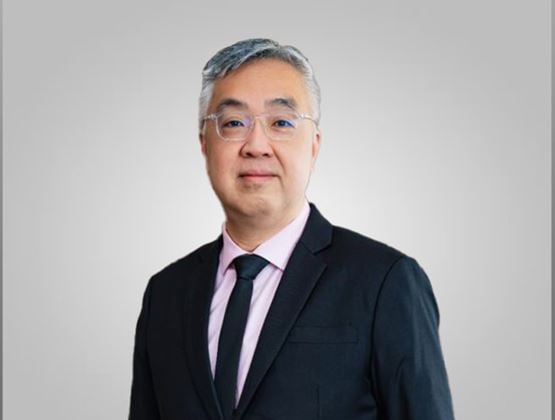
Henri Tan, Managing Director of SIAL ASEAN & India, argues that market presence is essential to understanding those differences. SIAL has consequently developed complementary events in Malaysia, Vietnam, Indonesia and India, connecting international suppliers with domestic buyers, retailers, distributors and foodservice operators.
The philosophy is deliberately decentralised. Rather than treating Asia as one market, the network aims to give businesses different points of entry, each reflecting local commercial realities.
That approach gives internationalisation a slightly different meaning. Expansion is not simply a question of putting the SIAL name in more cities. It is about creating connections between distinct ecosystems, allowing information, buyers, products and innovation to travel between them.
The first SIAL Vietnam in 2026 extended that Asian presence further, alongside events serving Malaysia, Indonesia and India.
India moves from domestic opportunity to international showcase
India is particularly important within that picture because it operates simultaneously as a vast consumer market, an agricultural powerhouse and an increasingly ambitious exporter of processed and value-added foods.
SIAL India Mumbai, held from 10 to 12 April 2026 at the Jio World Convention Centre, was conceived as a consolidated national platform following the merger of the previous Delhi and Mumbai formats. The event brought together more than 400 exhibitors, over 12,000 trade visitors and hosted buyers from more than 50 countries.
For international suppliers, Mumbai offers direct contact with one of the world’s most closely watched food markets. For Indian producers, the same food innovation exhibition can function in reverse, providing connections with buyers and commercial partners capable of taking Indian products abroad.
The strength of that export opportunity is visible in the figures. India exported US$51.91 billion of agricultural products in 2024-25. Marine products generated US$7.41 billion, Basmati rice US$5.94 billion and spices US$4.45 billion.
Rice demonstrates the scale particularly clearly. India has been the world’s largest rice exporter since 2012, with total rice exports reaching US$12.47 billion in 2024-25. However, the more interesting shift for the food sector lies beyond volume alone.
Paris puts value addition in the spotlight
At SIAL Paris 2026, India’s Country of Honour presence brought more than 144 companies together across processed food, agricultural commodities, organic products and start-ups. Its programme included culinary demonstrations and a unified national presentation intended to move regional specialities towards greater international recognition.
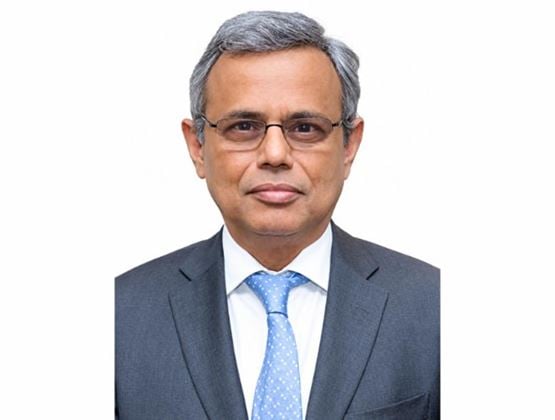
Jawed Ashraf, Chairman of the India Trade Promotion Organisation, describes the broader objective as moving beyond agricultural commodities towards ready-to-eat, processed, packaged and branded products aligned with European consumer expectations. Quality, traceability, food safety, cold-chain infrastructure and compliance with European standards all form part of that transition.
The timing is significant. Negotiations on the EU-India Free Trade Agreement concluded on 27 January 2026, against a backdrop of €118 billion in EU-India goods trade in 2025. The agreement has not yet entered into force, but its conclusion adds another layer to the commercial conversation surrounding food, market access and future value chains.
For Ashraf, France can also act as a gateway for Indian companies seeking a wider European presence, particularly as Indian exporters seek to transform agricultural strengths into more recognisable global brands.
One network, several directions of travel
The connection between Mumbai and Paris therefore runs both ways. Mumbai gives international businesses a closer view of Indian demand, distribution and sourcing. Paris gives Indian producers access to an international concentration of retailers, importers, distributors and food manufacturers.
That circulation is increasingly central to the SIAL Network’s international model. Innovation discovered in one market can be exposed to buyers in another. Local producers can become exporters, while established international companies can test new markets through events embedded in their commercial ecosystems.
India’s presence during this food exhibition 2026 cycle makes that exchange particularly visible. Its scale gives international businesses a reason to enter the market, while the growing sophistication of its processing, branding, start-up and export sectors gives the rest of the world more reasons to look towards India for supply and innovation.
SIAL’s internationalisation is consequently becoming less about creating one global centre of gravity and more about connecting several of them. From Mumbai to Paris, and across the wider SIAL Network, the value increasingly lies in what can travel between those markets: products, ideas, investment, partnerships and, ultimately, business.